

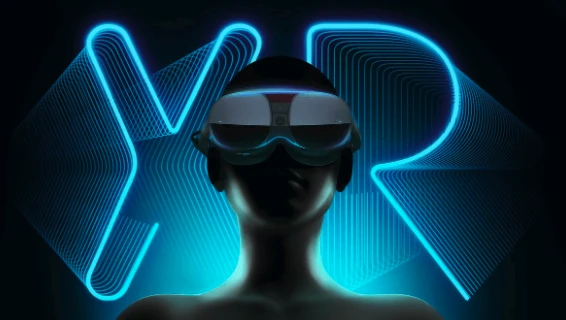
XR is an umbrella term encompassing virtual reality (VR), augmented reality (AR), and mixed reality (MR), used to describe the enhancement or replacement of users' perception of and interaction with the real world through digital technology.
Below is a brief description of these three technologies:
- Virtual Reality (VR): Creates a fully immersive virtual world through devices such as head-mounted displays (HMDs), isolating users from the physical environment. All visual and auditory perceptions come from computer-generated virtual environments. VR is commonly used in gaming, education and training, medicine, and other fields.
- Augmented Reality (AR): Overlays digital content (such as images, text, and sounds) onto the real-world view. Users can still perceive the surrounding real world, but through devices (like smartphones or AR glasses), they see virtual elements integrated with the real environment. AR is widely applied in retail, education, entertainment, industrial maintenance, and more.
- Mixed Reality (MR): Combines features of virtual reality and augmented reality. Virtual objects can not only interact with the real environment but also perceive and respond to changes in the real world in real time. For example, Microsoft's HoloLens is a typical MR device that seamlessly integrates virtual objects with the real world, enabling a high degree of interactivity.
Application areas of XR technology include:
- Education: Immersive learning experiences, virtual classrooms, simulated experiments, etc.
- Gaming and Entertainment: VR games, AR applications, virtual concerts, etc.
- Healthcare: Virtual surgery training, augmented reality navigation, telemedicine, etc.
- Industry: Virtual manufacturing, equipment maintenance, remote collaboration, etc.
The development of XR technology has brought innovative opportunities to multiple industries, especially in improving interactivity, immersion, and work efficiency.
Below are the latest developments in the XR technology field:
1. Hardware Advancements
- Head-Mounted Displays (HMDs): In recent years, the hardware performance of VR and AR devices has significantly improved, with major enhancements in image quality, comfort, and response speed. For example, Meta's (formerly Facebook)Quest 3has made notable progress in image clarity and processing power, supporting longer usage times.
- Augmented Reality Glasses: Microsoft'sHoloLens 2and Magic Leap'sMagic Leap 2are gradually maturing in industrial and commercial applications, especially in fields like manufacturing, healthcare, and architectural design, offering an unprecedented combination of virtual information and the real world.
- Gesture Control and Eye Tracking: The new generation of XR devices enhances user interaction methods. For instance, the Meta Quest Pro features eye tracking and gesture recognition, allowing users to operate through eye or hand movements, further enhancing immersion.
2. Diversification of Content and Applications
- Immersive Entertainment: The quality and variety of VR games and VR films continue to increase. Compared to traditional games and films, VR and AR offer a more immersive experience, allowing players and viewers to enter a lifelike virtual world. For example, Half-Life: Alyx is considered a milestone in VR gaming, widely praised for its high interactivity and realism.
- Virtual Tourism and Experiences: With the proliferation of VR devices, virtual tourism has become an emerging form of entertainment and education. Users can experience famous landmarks and historical sites around the world from home using VR devices.
- AR in Retail and Advertising: AR technology allows consumers to experience products before purchase. For example, IKEA, through itsIKEA Placeapp, lets users preview furniture placement in their homes using AR technology, while high-end brands like Gucci have also started using AR to attract younger consumers.
3. Software and Platform Development
- Advancements in Unity and Unreal Engine: These game engines are no longer limited to game development; they also play a crucial role in XR development. Unity and Unreal Engine provide powerful real-time rendering capabilities, enabling developers to easily create complex virtual worlds, interactions, and animations.
- WebXR: WebXR is a technology designed to bring VR and AR experiences to browsers. Developers can use the WebXR API to build cross-device XR applications, allowing users to directly experience immersive content through a browser.
- Integration of AI and XR: Artificial intelligence (AI) is deeply integrating with XR technology to provide smarter interactive experiences. For example, AI-based object recognition, speech recognition, and emotion analysis can significantly enhance the interactivity and responsiveness of XR systems.
4. Industry Applications
- Healthcare:
- Surgical Training and Simulation: VR technology is widely used in medical education and surgical training. By simulating virtual surgical scenarios, doctors can practice repeatedly to improve their operational skills and decision-making abilities. Well-known VR medical platforms like Osso VR and Surgical Theater have been adopted by hospitals and medical schools worldwide.
- Telemedicine: AR and VR technologies enable doctors to perform remote collaboration for diagnosis, surgical planning, and patient monitoring. Especially in resource-limited areas, XR technology provides new solutions for healthcare services.
- Industry and Manufacturing:
- Virtual Training and Remote Collaboration: Industrial manufacturers use AR and VR to provide virtual training for employees, reducing risks in actual operations. Additionally, MR technology allows teams in different locations to collaborate and view virtual data from production lines in real time.
- Equipment Repair and Maintenance: Through AR glasses, engineers can access real-time equipment information and operational guides during repairs. This makes complex equipment maintenance more efficient and allows remote guidance for repair personnel.
- Education:
- Immersive Learning Experiences: XR technology is revolutionizing the education field. Through applications like virtual labs and virtual historical tours, students can practice and learn in a safe and immersive environment. For example, virtual field trips allow students to experience world history and culture at low cost and without risk.
- Personalized Learning: Combining AI and XR, educational platforms can provide personalized learning content and progress recommendations for each student. AI-assisted XR educational tools allow students to receive instant feedback during interactions, enhancing learning outcomes.
5. The Impact of 5G and Cloud Computing on XR
- 5G Networks: The large-scale commercialization of 5G technology has brought greater bandwidth and lower latency to XR technology, enabling high-quality VR and AR experiences. Especially on mobile devices, 5G networks allow users to experience AR games and applications more smoothly.
- Cloud Computing and Edge Computing: With the proliferation of cloud computing and edge computing, the rendering and processing of XR content are no longer limited to local devices. The computing power of cloud platforms enables developers to create more complex XR applications and reduces reliance on high-performance hardware. For example, cloud XR services can stream VR/AR applications from the cloud to end devices, reducing the need for high-end hardware.
6. Challenges and Future Outlook
Despite significant progress, XR technology still faces several challenges:
- Device Adoption: Although the prices of XR devices are gradually decreasing, high-quality devices remain expensive, limiting their widespread application in certain fields.
- Content Creation: Creating XR content requires substantial specialized skills and resources. As technology evolves, content creation tools and platforms are also improving, but it still takes time to cultivate more content creators.
- Privacy and Security Issues: XR technology involves a large amount of user data, including location, behavior, and biometric information. Ensuring the privacy and security of user data remains an urgent issue to address.
Summary
XR technology is rapidly developing, penetrating multiple fields such as education, healthcare, entertainment, and manufacturing, bringing innovation to traditional industries. With continuous improvements in hardware, software, networks, and computing power, the application scenarios of XR will continue to expand, and it is expected to become an important tool for transforming work, entertainment, and daily life in the future. However, to achieve widespread adoption of XR technology, challenges such as device costs, content development, and privacy security still need to be overcome.

 简体中文
简体中文  English