

If you've ever tried using your phone to shoot a TV screen at home, or an outdoor LED billboard by the roadside, you've likely captured some eerie footage: slowly moving black scanlines across the screen, or strange flickering and tearing in the image.
 2026-07-31

Throughout the history of theater and film, humanity has made countless brilliant attempts to create “infinite space” on a limited stage. From the perspective paintings of ancient Greek theaters, to the hand-painted backdrops of Hollywood's Golden Age, to today's XR (Extended Reality) virtual production.
2026-07-29

In front of every monitor in an XR virtual studio, pairs of highly vigilant eyes are fixed.
2026-07-27

In Hollywood and the global film industry, there is one classic scene universally acknowledged as the most torturous for directors and VFX supervisors—the car scene.
2026-07-25

When *The Mandalorian* sparked the first wave of XR virtual production in 2020, the technical hero behind the scenes was Unreal Engine 4. Yet, the set was still shrouded in a hidden anxiety.
2026-07-23

In the world of cinematography, there exists an almost religious aesthetic reverence—the anamorphic lens.
2026-07-22

In the past two years, if you've been following virtual production, you may have heard directors or audiences offer a subtle critique like this:
2026-07-20

In traditional film and television production systems, there is a well-known yet compromise-laden and resigned catchphrase: “Alright, let's just shoot it like this for now, we'll fix it in post.”
2026-07-19

In 3D games or VR (Virtual Reality) experiences, there is a physiological nightmare that almost everyone encounters—“Motion Sickness.”
When your body feels like it is moving, but the image your eyes see is slightly delayed, this tiny perceptual “disconnect” immediately triggers a chemical alarm in your brain, causing intense dizziness and nausea.
In XR (Extended Reality)
2026-07-17
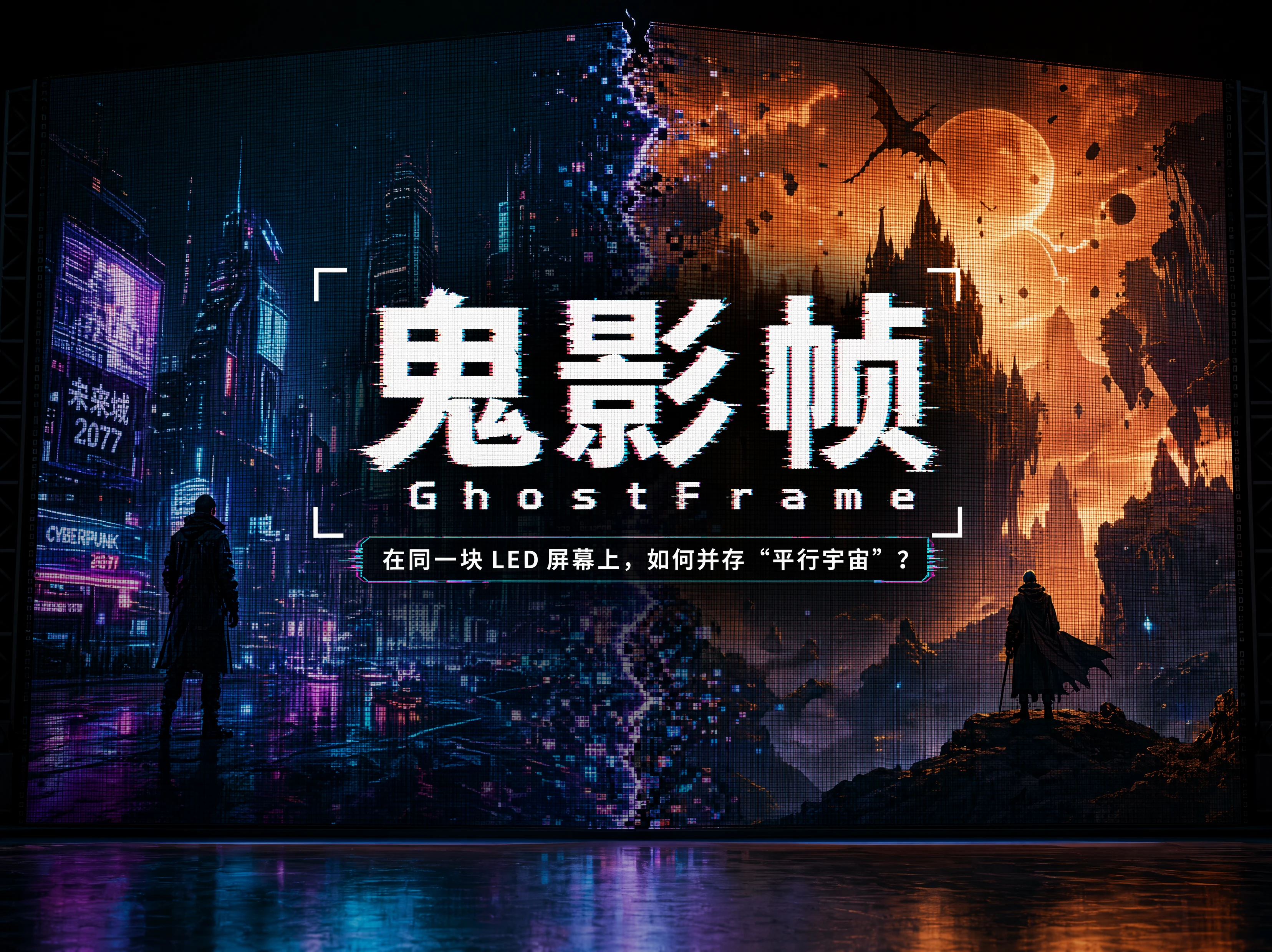
On a film and television production set, there is a standard workflow that has long been industry common sense—Multi-Cam Shooting.
2026-07-15
 简体中文 简体中文
  English