In the fields of Virtual Production and high-end live streaming, technology selection often determines project success. Current mainstream real-time virtual production solutions mainly include Aximmetry, Unreal Engine native pipeline, TouchDesigner, Ventuz, Vizrt, and Disguise. Faced with these options, many teams struggle with the choice. This article will conduct an objective comparative analysis of Aximmetry from four dimensions: technical capability, implementation cost, team fit, and future scalability, and provide clear recommendations for different scenarios.
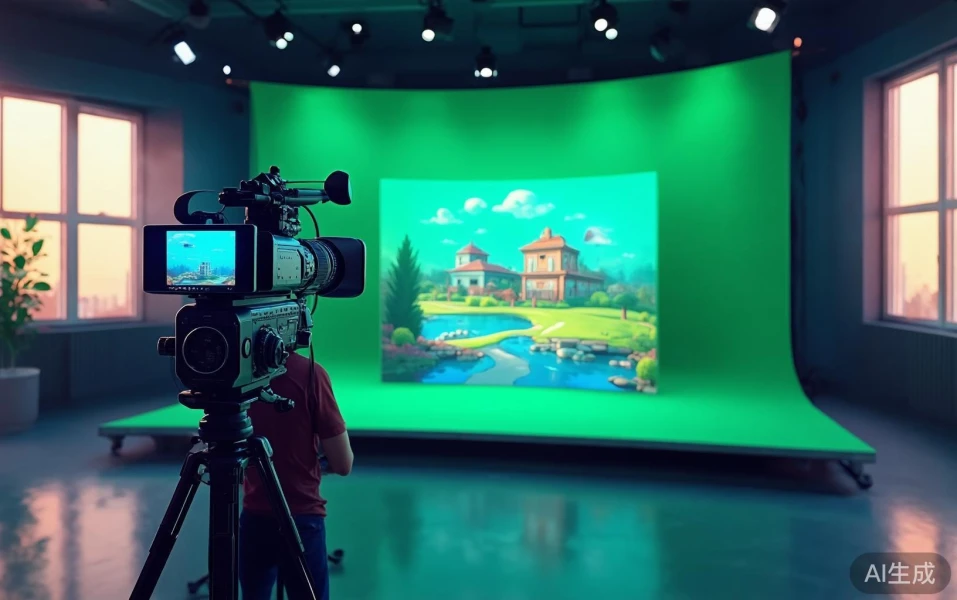
Core Capability Comparison Matrix
Chroma Keying Capability
Aximmetry has long been a leader in this field. Its Advanced Chroma Keyer module supports multi-point sampling, sub-pixel edge reconstruction, and independent Shadow Catcher, handling complex objects like hair, smoke, and glass exceptionally well.
In comparison, Unreal Engine's native keying still requires extensive custom Blueprint and Material development; TouchDesigner, while flexible, lacks broadcast-grade preset algorithms; Vizrt's keying is stable but relatively conservative in image quality. In actual tests, under the same green screen conditions, Aximmetry typically achieves 20-30% higher edge cleanliness and spill suppression.
Depth of Integration with Unreal Engine
Aximmetry DE is currently one of the most mature solutions for integration with Unreal Engine 5. Through the official Render Plugin, it enables near-zero-copy texture transfer and bidirectional parameter control. Art teams can freely create in UE, while technical teams handle logic and output in Aximmetry, with almost no loss of UE's visual quality.
Although Disguise and Ventuz also support UE, their integration depth and stability still lag behind Aximmetry. A pure UE pipeline faces broadcast pain points such as signal input/output, Genlock, and multi-camera synchronization, requiring significant additional development resources.
Camera Tracking and XR Support
Aximmetry natively supports almost all mainstream tracking protocols, including Mo-Sys, stYpe, Ncam, Vicon, OptiTrack, HTC Vive, and features built-in precise Frustum Rendering and ICVFX toolset, making it particularly suitable for LED wall XR projects.
In large-scale XR scenarios, Aximmetry excels in multi-machine cluster rendering and color management (ACES workflow). While TouchDesigner offers high flexibility, setting up an equivalent XR system typically takes 2-3 times longer than with Aximmetry.
Operational Threshold and Workflow Efficiency
Aximmetry uses node-based visual programming, with a significantly lower learning curve compared to pure code solutions. Experienced directors or technical staff can typically independently build complex live streaming logic within 2-4 weeks.
Ventuz and Vizrt lean more towards traditional broadcast template-based operations, suitable for TV stations; TouchDesigner is better suited for experimental, installation-type projects and requires higher programmer skills.
Selection Recommendations for Different Scenarios
Scenario 1: Medium to Large LED Wall XR Virtual Studio (Budget 5 million+)
Recommendation Index: ★★★★★
Prioritize Aximmetry DE + multi-machine cluster solution. Its maturity in color calibration, real-time frustum rendering, and ICVFX workflow is currently leading. It seamlessly integrates with LED screens like ROE and Unilumin, significantly reducing post-production retouching work during shooting.
Scenario 2: Virtual Streamer / VTuber Live Studio (Budget 500,000 - 2 million)
Recommendation Index: ★★★★☆
The Aximmetry Broadcast version offers excellent cost-effectiveness. Paired with Live Link Face, Full Body Tracking, and UE virtual scenes, it enables quick setup of high-quality 3D live streaming rooms. Compared to pure UE + OBS solutions, stability and image quality are significantly improved, with support for one-click multi-platform streaming (Bilibili, Douyin, YouTube).
Scenario 3: TV Station Virtual Studio Upgrade
Recommendation Index: ★★★★
If an existing mature Vizrt or Ventuz system is in place, it can be retained as a backup; for new projects, strongly recommend introducing Aximmetry to leverage its data binding capabilities and node flexibility for dynamic graphics, real-time interaction, and other new features.
Scenario 4: Experimental Art Installations or Small Independent Teams
In this case, TouchDesigner may offer better cost-effectiveness. However, if there are future plans to transition to commercial live streaming or XR, it is advisable to start directly with Aximmetry to avoid redundant investment later.
Key Implementation Recommendations
- Hardware Configuration Baseline(2025 Reference)
- Single-machine 4K60 project: Intel i9 + RTX 4090 + 64GB RAM
- XR multi-machine project: Each render node recommended RTX 6000 Ada or A6000 × 2
- Team Capability Requirements
Requires 1 UE artist + 1 Aximmetry technical director + 1 tracking/lighting engineer. Compared to pure code solutions, Aximmetry can reduce programmer dependency by 40%. - Risk Control
- Two verifications must be completed before project launch: Tracking Calibration and Color Management.
- It is recommended to establish standard project templates, including preset Keyer, Tracker, and Output node groups.
- Conduct at least 72 hours of uninterrupted stress testing before live streaming.
Conclusion: Aximmetry is Becoming the New Standard
After years of iteration, Aximmetry is no longer a “backup option” but thepreferred platformfor many professional teams. While maintaining high image quality and strong real-time performance, it significantly lowers the technical threshold and time cost of virtual production.
For teams planning virtual production upgrades in 2025, it is recommended to arrange official Aximmetry training or POC (Proof of Concept) testing as soon as possible. In most broadcast-grade and XR projects, its overall performance has clearly surpassed single-engine or traditional broadcast solutions.
The true era of virtual content creation is not about whose engine is flashier, but who can turn imagination into live broadcast images faster, more stably, and with higher cost-effectiveness. Aximmetry is becoming the optimal solution to achieve this goal.
 简体中文
简体中文  English