
When Real-Time Interaction Meets Infinite Scenes, the Next Stop for Live Streaming is “Immersive Reality”
The “Dimensional Wall” of Live Streaming”
In the era of traffic supremacy, live streaming has become the most direct bridge connecting brands, media, and content creators with their audiences. However, traditional live streaming models are facing increasingly severe challenges: monotonous green screen keying, bland studio backgrounds, and creative concepts that are difficult to realize due to physical space constraints. Audience fatigue and the demand for higher-quality content are calling for a visual revolution in the live streaming field.
The key to breaking through this “dimensional wall” is preciselyVirtual Production (VP)This technology, once considered exclusive to top-tier Hollywood productions, is permeating the live streaming field at an unprecedented pace, completely overturning our understanding of “real-time content.”
I. What is Virtual Production Applied to Live Streaming?
In short, virtual production in live streaming utilizesreal-time rendering engines (such as Unreal Engine 5), LED displays, and camera tracking technologyto seamlessly integrate physical entities like hosts, guests, or products with dynamic, interactive 3D virtual scenes, anddirectly broadcast them in real-time as a production method。
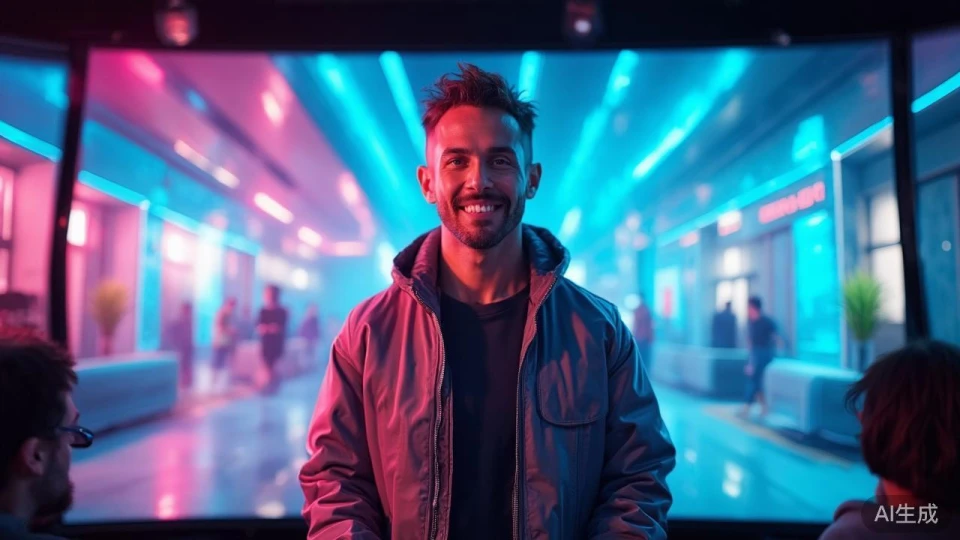
It is no longer the traditional green screen logic of “record first, key later,” but rather a “what you see is what you get”In-Camera VFXThe host stands in front of a massive LED screen displaying photorealistic virtual environments. The camera's position and movement are tracked in real-time, and the virtual background undergoes precise parallax changes based on the camera's perspective, creating a convincing, tangible sense of three-dimensional space visible to the naked eye. What the host sees is what the audience sees—everything happens live on the spot.
II. Four Core Advantages of Virtual Production for Live Streaming
-
Unparalleled Immersion and Visual Impact
Unlimited Scenes: From Times Square to the surface of Mars, from futuristic product launches to fantastical forests, any boundless imagination can become the backdrop of a live stream. This provides infinite creative space for product launches and brand storytelling.
-
Realistic Lighting: The LED screen itself acts as a light source, realistically reflecting the light and colors of the virtual scene onto the host and physical props, creating a natural ambient light wrap effect. This achieves a level of realism that traditional green screen post-production compositing struggles to match, making the integration of characters and backgrounds seamless.
Unprecedented Interactivity and Flexibility
-
Real-Time Interaction: The host can interact with elements within the virtual scene. For example, in an automotive live stream, the host can switch vehicle colors with one click or display an internal structural cutaway; in a financial live stream, dynamic 3D data charts can be generated in real-time behind the host, who can then “walk into” the charts to explain them.
-
Flexible Workflow: The director can change scenes, weather, time, or even move objects within the virtual scene during the live broadcast to handle unexpected situations or enhance program effects, granting unprecedented narrative freedom to live streaming.
Cost Reduction, Efficiency Improvement, and Workflow Reshaping
-
Cost Savings: Saves on costs for building and dismantling physical sets, travel expenses for remote shoots, and venue rental fees. A single virtual studio can be reused for countless scenes, greatly improving asset utilization.
-
Efficiency Gains: Significantly shortens the production cycle. Since the final image is largely completed during shooting, the cumbersome post-production compositing and rendering processes are eliminated, achieving a “shoot and broadcast” model that perfectly meets the stringent timeliness requirements of live streaming.
Brand Image as a “Technological Moat”
-
In an era of content homogenization, adopting virtual production technology for live streaming is itself a powerful brand statement. It showcases the brand's embrace of cutting-edge technology, conveys an innovative, high-end, and professional brand image, and can instantly stand out among numerous live streams, creating a unique memory point.
III. Typical Application Scenarios of Virtual Production in Live Streaming
-
Enterprise Live Streaming (Product Launches/Online Summits): Apple's online product launches in recent years are top-tier examples. Virtual production can create highly futuristic display spaces for new products, enhancing their technological appeal and attractiveness.
-
E-commerce Live Streaming: Place products in their ideal usage scenarios. For example, showcasing furniture in a virtual Nordic living room or a down jacket on a virtual snowy mountain greatly enhances the product display effect and viewers' purchase intent.
-
News and Weather Broadcasting: For instance, The Weather Channel uses virtual production technology to simulate extreme weather like hurricanes and tornadoes, allowing viewers to experience the power of the weather immersively, making information delivery more intuitive and impactful.
-
Esports Event Live Streaming: “Teleport” commentators and players into the game map to interact with game characters and battle scenes, providing viewers with an ultimate viewing experience that bridges the in-game and real-world.
-
Virtual Concerts/Online Performances: Artists can interact with ever-changing virtual worlds on a real stage, creating an audio-visual feast for online audiences that breaks physical limitations.
Embrace the Future of Live Streaming, Right Now
Virtual production technology is no longer a distant future; it has become a powerful engine for improving live streaming content quality, enhancing audience engagement, and building differentiated brand advantages. It upgrades live streaming from an “information window” to an “experience portal” that can be explored and interacted with.
For brands and content creators seeking breakthroughs, now is the best time to embrace this transformation. Choosing a professional virtual production partner means selecting a strategic ally capable of turning your creativity into stunning reality and ultimately gaining an edge in fierce market competition.
Ready to launch your next groundbreaking live stream? Let's use technology to give wings to imagination.

 简体中文
简体中文  English