
XR (Extended Reality) technology is reshaping the boundaries of content production and distribution at an unprecedented pace. This article delves into the core technologies, industry applications, future trends, and challenges of XR virtual production and XR live streaming, revealing how it is disrupting traditional filmmaking and live streaming models, bringing a revolutionary transformation in immersive experiences for users.
Driven by the wave of digitalization, the methods of content production and distribution are undergoing a profound transformation. XR (Extended Reality) technology, as a collective term for Virtual Reality (VR), Augmented Reality (AR), and Mixed Reality (MR), is revolutionizing traditional filmmaking and live streaming models. XR virtual production and XR live streaming not only break the constraints of physical space but also deliver unprecedented immersive content experiences to users through real-time rendering, virtual scene integration, and interactive experiences.
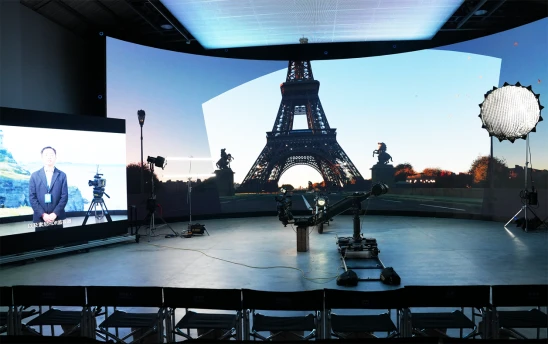
I. XR Virtual Production: From Green Screen to Virtual Scenes, a Disruptive Revolution in Filmmaking
1 What is XR Virtual Production?
XR virtual production is a production method that seamlessly integrates virtual scenes with real-world filming using XR technology. By leveraging real-time rendering engines, motion capture, and camera tracking technology, it allows directors and actors to see the composite effect of virtual scenes and live footage on set, completely transforming the traditional green screen workflow.
2 Core Technologies: Real-Time Rendering and Virtual-Real Integration
Real-Time Rendering Engines: Such as Unreal Engine and Unity, capable of generating high-quality virtual scenes in real time and seamlessly blending them with live footage.
Motion Capture Technology: Captures actors' movements and expressions via sensors, mapping them onto virtual characters in real time.
Camera Tracking Technology: Tracks the camera's position and angle in real time to ensure consistent perspective between virtual scenes and live footage.
3 Industry Applications: From Hollywood to Local Filmmaking
The Mandalorian: Disney used XR virtual production technology to render virtual scenes in real time on LED screens, providing actors with an immersive performance environment and significantly boosting production efficiency.
The Lion King: Combined virtual animal characters with real-world scenes using XR technology to create realistic visual effects.
Chinese Film Industry: An increasing number of domestic films are adopting XR virtual production. For example, some scenes in The Wandering Earth 2 utilized XR technology, showcasing the technological progress of China's film industry.
4 Advantages and Challenges
Advantages: What you see is what you get, improved production efficiency, enhanced creative freedom.
Challenges: High technical costs, demanding hardware requirements, high barriers to content creation.
II. XR Live Streaming: Breaking Time and Space Limits, Creating Immersive Interactive Experiences
1 What is XR Live Streaming?
XR live streaming integrates virtual elements into live broadcast footage, using real-time keying, virtual scene generation, and interactive technology to deliver an immersive and engaging viewing experience. It is redefining the content format and user experience of live streaming.
2 Core Technologies: Real-Time Keying and Virtual Interaction
Real-Time Keying Technology: Uses AI algorithms to separate the host from the background and composite them with virtual scenes in real time.
Virtual Avatar Generation: Viewers can create their own virtual avatars to interact with the host or other viewers in real time.
5G Network Support: High-speed, low-latency network transmission is key to smooth XR live streaming.
3 Industry Applications: From Entertainment to Business
Virtual Concerts: Travis Scott's virtual concert in Fortnite attracted over 12 million viewers, demonstrating the immense potential of XR live streaming.
E-commerce Live Streaming: Integrates virtual products into live footage using XR technology, allowing users to view product details from 360 degrees and enhancing the shopping experience.
Educational Live Streaming: Creates virtual classrooms with XR technology, enabling students to participate via virtual avatars and boosting learning engagement.
4 Advantages and Challenges
Advantages: Enhanced visual impact, increased user engagement, expanded application scenarios.
Challenges: High technical costs, complex content production, user experience optimization.
III. Future Trends: How XR Technology Will Reshape the Content Industry
1 Technology Integration: The Synergistic Evolution of AI, 5G, and XR
AI Empowerment: AI will further enhance the efficiency of XR content generation and interactive experiences, such as generating virtual scenes or optimizing real-time keying effects.
5G Adoption: The high bandwidth and low latency of 5G networks will provide more stable technical support for XR live streaming.
Cloud Computing Support: Cloud rendering technology will lower the hardware barriers for XR content production, driving industry adoption.
2 Expanding Application Scenarios: From Filmmaking to the Metaverse
Metaverse Content Production: XR virtual production and XR live streaming will become key tools for creating metaverse content, offering users immersive virtual experiences.
Cross-Industry Applications: XR technology will permeate fields like education, healthcare, and tourism, such as virtual surgical training and virtual travel experiences.
3 Hardware Upgrades: Lightweight and High Performance
Lightweight Design: XR devices will evolve to be more portable and comfortable, enhancing user experience.
High-Performance Displays: Higher resolution and lower latency display technologies will further improve the immersion of XR content.
IV. Challenges and Reflections: Key Factors for XR Technology Adoption
Despite the immense potential of XR virtual production and XR live streaming, their widespread adoption still faces numerous challenges:
High Technical Costs: The high cost of XR equipment and technology limits application by small and medium-sized enterprises.
Incomplete Content Ecosystem: Producing high-quality XR content requires professional teams and technical support, and the industry ecosystem is not yet mature.
User Experience Optimization: The comfort and interactivity of XR devices still need improvement.
XR virtual production and XR live streaming are revolutionizing traditional content production and distribution methods, delivering immersive and interactive new experiences to users. As technology continues to advance and application scenarios expand, XR technology will become a key driver of the content industry, propelling sectors like filmmaking, live streaming, and gaming to new heights.
The future is here, and the revolution of XR technology has only just begun. Whether content creators or technology developers, only by keeping pace with technological trends can they seize opportunities and lead the way in this transformation.
References:
XR Virtual Production Technology White Paper, 2023.
XR Live Streaming Application Development Report, 2023.
The Future of XR in Filmmaking, 2022.
2025 Technology Trend Analysis, 2025.

 简体中文
简体中文  English