
In recent years, with the rapid advancement of technology, XR (Extended Reality) has become a key driving force in the film production and live streaming industries. XR virtual production and XR live streaming represent the forefront of technological innovation in the media industry, not only transforming the ways of creation and viewing but also profoundly impacting audience interaction experiences and the industry's business models.
I. XR Virtual Production: Deep Integration of Creation and Audience Experience
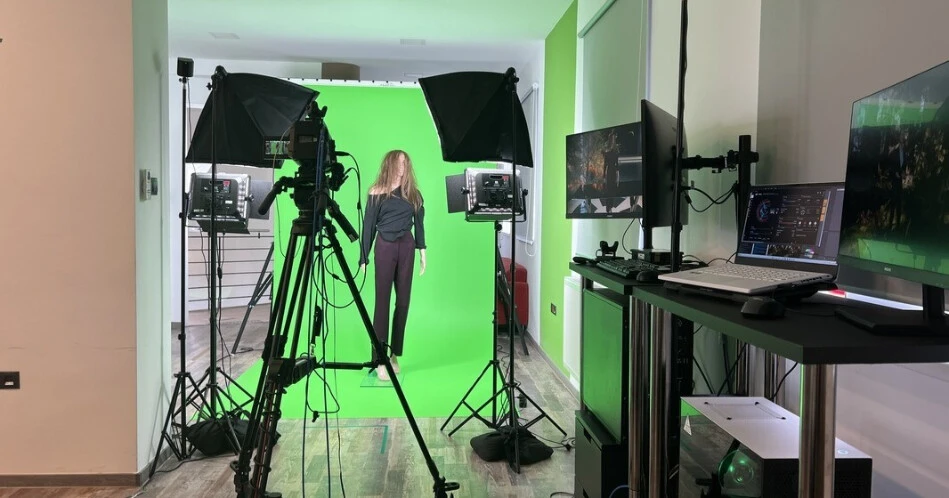
XR virtual production combines multiple technologies such as virtual reality (VR), augmented reality (AR), and mixed reality (MR), offering unprecedented creative freedom for film and television production. The core of this creative approach lies in the fact that directors and production teams not only create visual effects in virtual spaces but also integrate virtual environments during the shooting phase through XR technology, ultimately delivering highly realistic and immersive film and television works.
1 Disruptive Transformation of Creative Models
Traditional film and television production often relies on on-location shooting and post-production compositing, resulting in lengthy workflows and high demands on venues and resources. The emergence of XR virtual production makes the creative process more flexible and efficient. In XR virtual production, the production team uses real-time rendering technology and motion capture devices to seamlessly combine virtual scenes with actor performances. This means that not only can backgrounds, props, and lighting be adjusted in real time, but actors' performances can also be instantly fed back into the virtual environment, breaking the limitations of traditional shooting techniques.
Additionally, virtual shooting allows creators to “pre-visualize” scenes in a virtual space, enabling timely adjustments to shooting angles, camera movements, and more, greatly enhancing production efficiency and creative flexibility.
2 Reduction in Production Costs and Cycles
Compared to traditional film and television production, XR virtual production can significantly reduce production costs. By replacing on-location shooting with virtual scenes, production teams no longer rely on massive sets and complex outdoor shoots, thereby reducing the need for physical resources. As real-time rendering technology matures, virtual scenes can accurately replicate the intricate details of the real world, while cloud computing technology supports large-scale multi-user collaboration, further lowering production barriers and costs.
II. XR Live Streaming: Immersive Interaction Leading a New Audience Experience
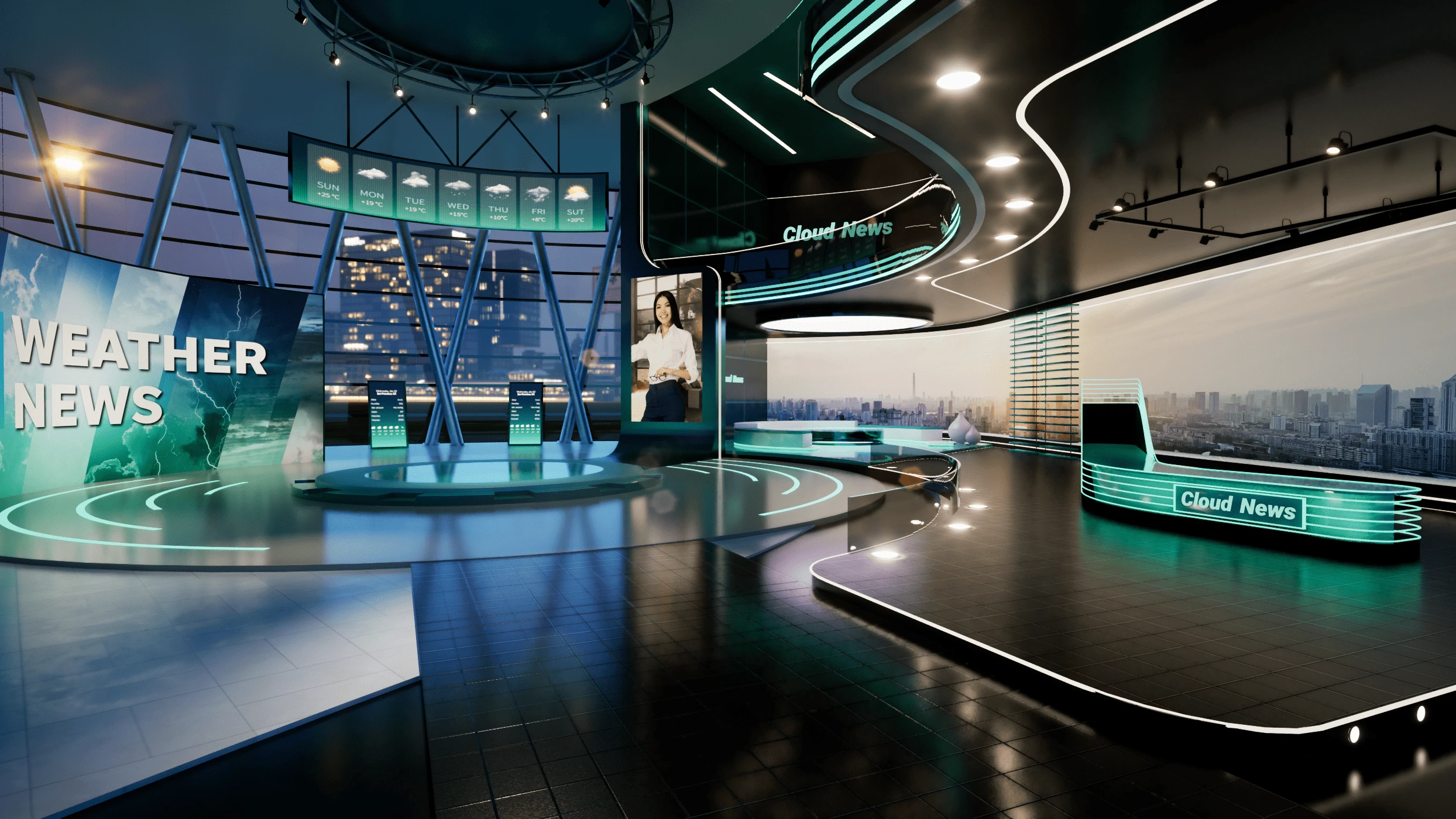
XR live streaming not only breaks away from traditional live streaming formats but also provides audiences with a brand-new interactive experience through the combination of virtual reality and augmented reality. Whether in virtual sports events, virtual concerts, or industries such as education and training and telemedicine, the emergence of XR live streaming has driven the development of the live streaming industry, demonstrating significant market potential.
1 Innovations Behind XR Live Streaming Technology
The successful implementation of XR live streaming technology relies on the integration of multiple cutting-edge technologies: virtual reality, augmented reality, 5G high-speed networks, real-time rendering, and low-latency transmission. Through the combination of these technologies, streamers can not only interact with audiences within virtual spaces but also provide real-time feedback on audience actions and emotions, greatly enhancing the immersion and interactivity of live streaming.
For example, instant switching of virtual scenes, direct interaction between virtual streamers and audiences, and real-time feedback on audience movements or expressions all make XR live streaming more interactive and entertaining than traditional live streaming. Audiences are no longer mere viewers but participants, creators, and in some cases, even part of the live content.
2 Cross-Industry Applications and Commercial Value
The application scenarios of XR live streaming extend far beyond the entertainment field. In addition to common virtual concerts and game live streaming, e-commerce live streaming, education live streaming, and medical live streaming have also begun to leverage XR technology for transformation. In the e-commerce sector, XR live streaming allows consumers to experience the real effects of products immersively, making virtual shopping experiences such as trying on clothes or testing cosmetics possible. In the education sector, XR live streaming introduces a new way of classroom interaction, where students enter virtual classrooms for efficient knowledge transfer and skill training. In the medical field, XR live streaming enables patients to remotely participate in surgical live streams or health lectures, enjoying real-time interactive medical consultation services.
These cross-industry applications not only enhance users' immersive experiences but also open up new revenue channels and business models for enterprises, further driving the rapid development of XR technology.
III. Challenges and Future Outlook
Although XR virtual production and XR live streaming technologies are advancing rapidly, the industry still faces some technical and market challenges. First, the high cost and complexity of hardware equipment are major obstacles to technology adoption. Virtual reality devices, rendering equipment, and 5G network infrastructure all require substantial investment. Second, content creators still have limited mastery of XR technology, and lowering the technical barrier while enhancing creators' technical application capabilities remains a significant challenge for industry development.
However, with the widespread adoption of 5G networks, further maturation of cloud computing technology, and continuous optimization of related hardware, these challenges are expected to be resolved in the coming years. It is anticipated that XR virtual production and XR live streaming will extend to a broader range of industries, becoming one of the core technologies driving future digital transformation.
XR virtual production and XR live streaming are driving profound changes in the media industry. They not only transform the way film and television are created but also open up new development spaces for the live streaming industry. As technology continues to advance and application scenarios expand, XR technology is bound to become an important component of the media industry in the future, redefining the ways of creation, interaction, and consumption. Creators, platforms, and technology companies within the industry need to keep pace with technological developments, seize the opportunities brought by XR technology, and jointly promote the maturity and widespread adoption of this innovative technology.

 简体中文
简体中文  English