

In the film and television visual effects (VFX) industry, there is a physical phenomenon that terrifies countless post-production compositors and is even jokingly called the industry's “chronic poison”—green screen spill (Green Spill).
 2026-07-14

In every XR (Extended Reality) virtual production studio, there is a mysterious area that fascinates everyone while putting technicians on high alert.
2026-07-13

In Hollywood, there was once a behemoth that made all producers tremble at the mention of it, yet they had no choice but to pay for it—the “Render Farm.”
2026-07-12

In the tech world, “Spatial Computing” has become the absolute focal point with the release of Apple Vision Pro. It heralds humanity's transition from the “Screen Era” to the “Spatial Interaction Era.”
2026-07-12

In Hollywood, a bittersweet and helpless true story has been circulating.
2026-07-10
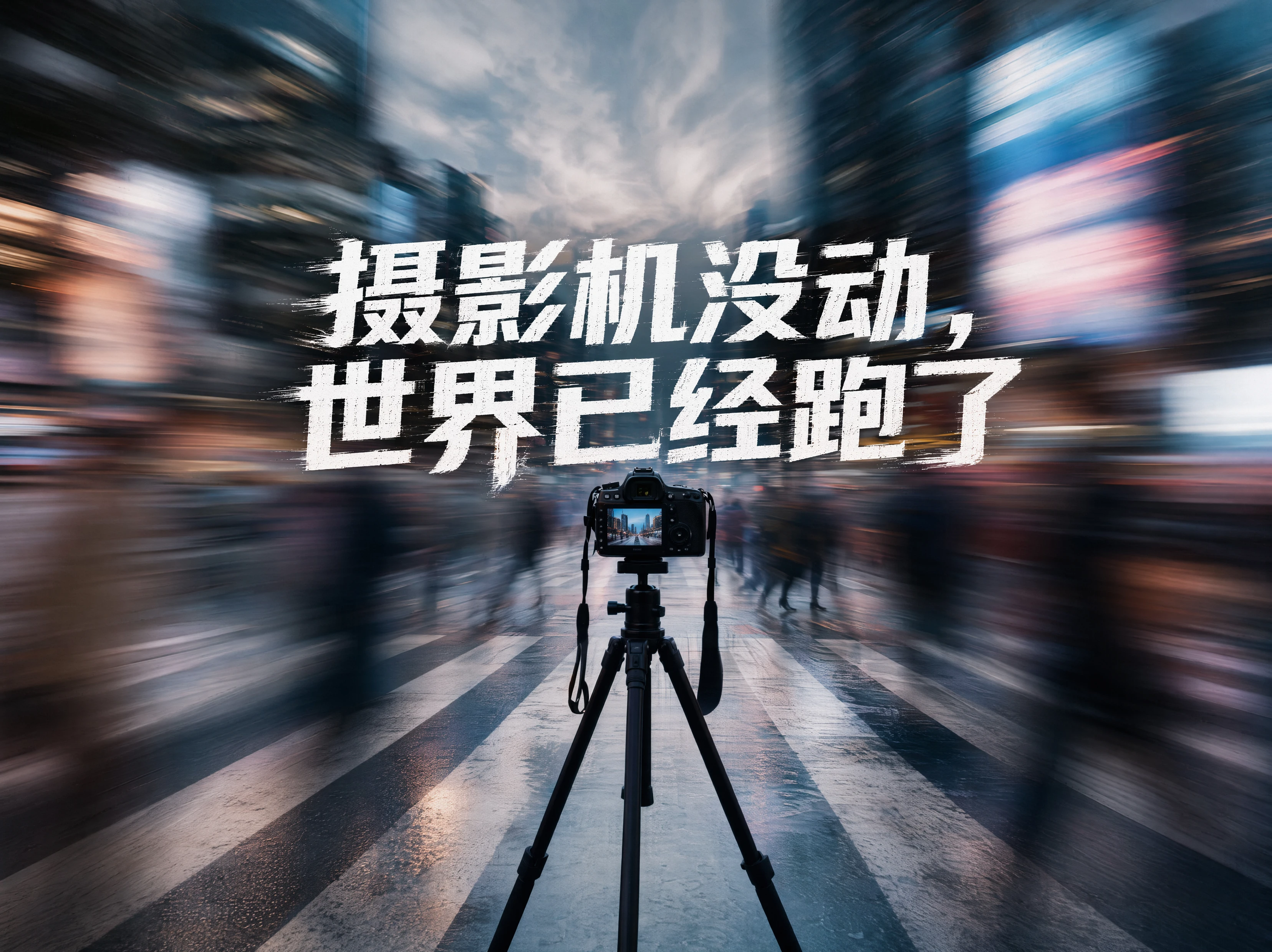
On a traditional film set, to shoot a “Fast & Furious”-style car chase, you often need to mobilize Hollywood's largest and most expensive “steel beasts.”
You need a pursuit vehicle capable of speeds over a hundred kilometers per hour, with a giant hydraulic crane arm called the “Russian Arm” mounted on its roof; you need to shut down entire city streets and deploy dozens of traffic police and safety officers; you also need that multi-million-dollar camera suspended in mid-air.
2026-07-07

In the past, the most direct evidence of whether an actor was an “international superstar” was their passport.
Flip through their passport, and it would be densely stamped with visas from various countries: last week filming an art film on the banks of the Seine in Paris, this week flying to the Sahara Desert for an action movie, and next month heading to the glaciers of Iceland for a sci-fi film.
Accompanying the halo of an “international superstar” is the never-adjusted jet lag, the perpetually packed suitcase, and the crew's often hundreds of...
2026-07-06

In the film industry, there is a term that all directors and cinematographers both love and hate — the “Golden Hour.”
That is the brief half-hour just before sunset or after sunrise. At this time, the sun's angle is extremely low, and the oblique light passes through the thick atmosphere, refracting into a warm, soft, dreamy orange-red. Any scene, under the filter of this moment, instantly becomes filled with epic poetry.
To capture this half-hour of “
2026-05-30

In the film and television production industry, there is a “industry jargon” that has been circulating for decades, and it is also the beginning of every VFX artist's nightmare —
“Don't worry, we'll fix it in post.”
Wind noise on set ruining the shot? Fix it in post. Lighting doesn't match? Adjust it in post. Actor's expression not quite right? Touch it up frame by frame in post. For a long time, “post-production” has been like a bottomless pit, silently bearing all the mess left behind by on-set shooting.
2026-05-29

If XR virtual production freed the crew from the shackles of the physical world, then the explosion of Generative AI has given XR a pair of wings to reach the realm of the creator.
In the past, although XR production was powerful, it still had a huge pain point: expensive and slow “digital asset development.” To present a high-precision 3D sci-fi city on a large screen, concept artists, 3D modelers,
2026-05-28
 简体中文 简体中文
  English