
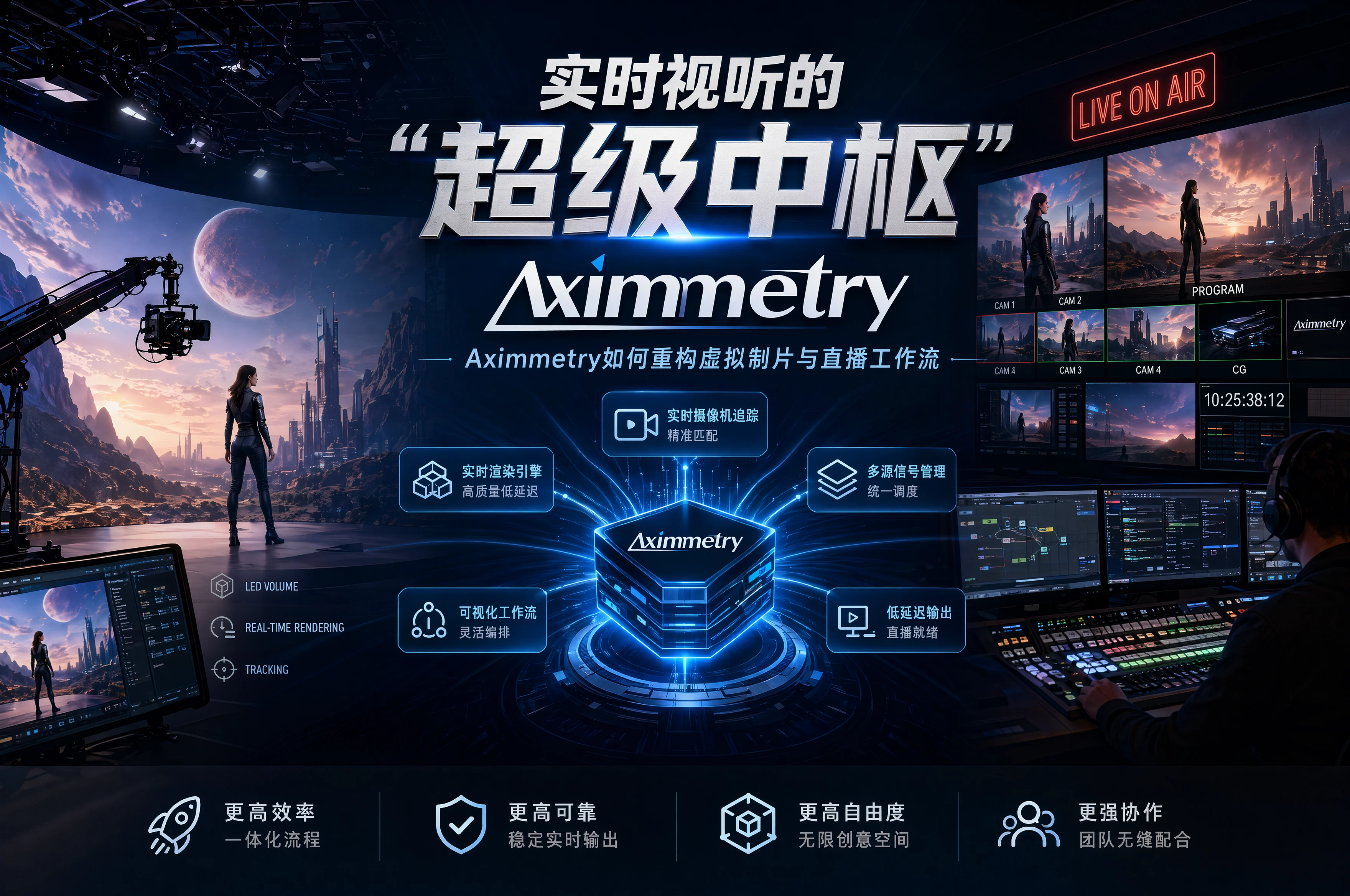
With the breakout of Unreal Engine (UE), the film, TV, and broadcasting industries have reached an unprecedented level of pursuit for “real-time rendering.” However, when producers and directors actually bring UE into studios and sets, they discover a harsh reality: “looking good” does not equal “being easy to use.” The native UE environment is complex, lacking broadcasting-grade directing logic, multi-camera scheduling, and support for various external tracking hardware
 2026-05-08
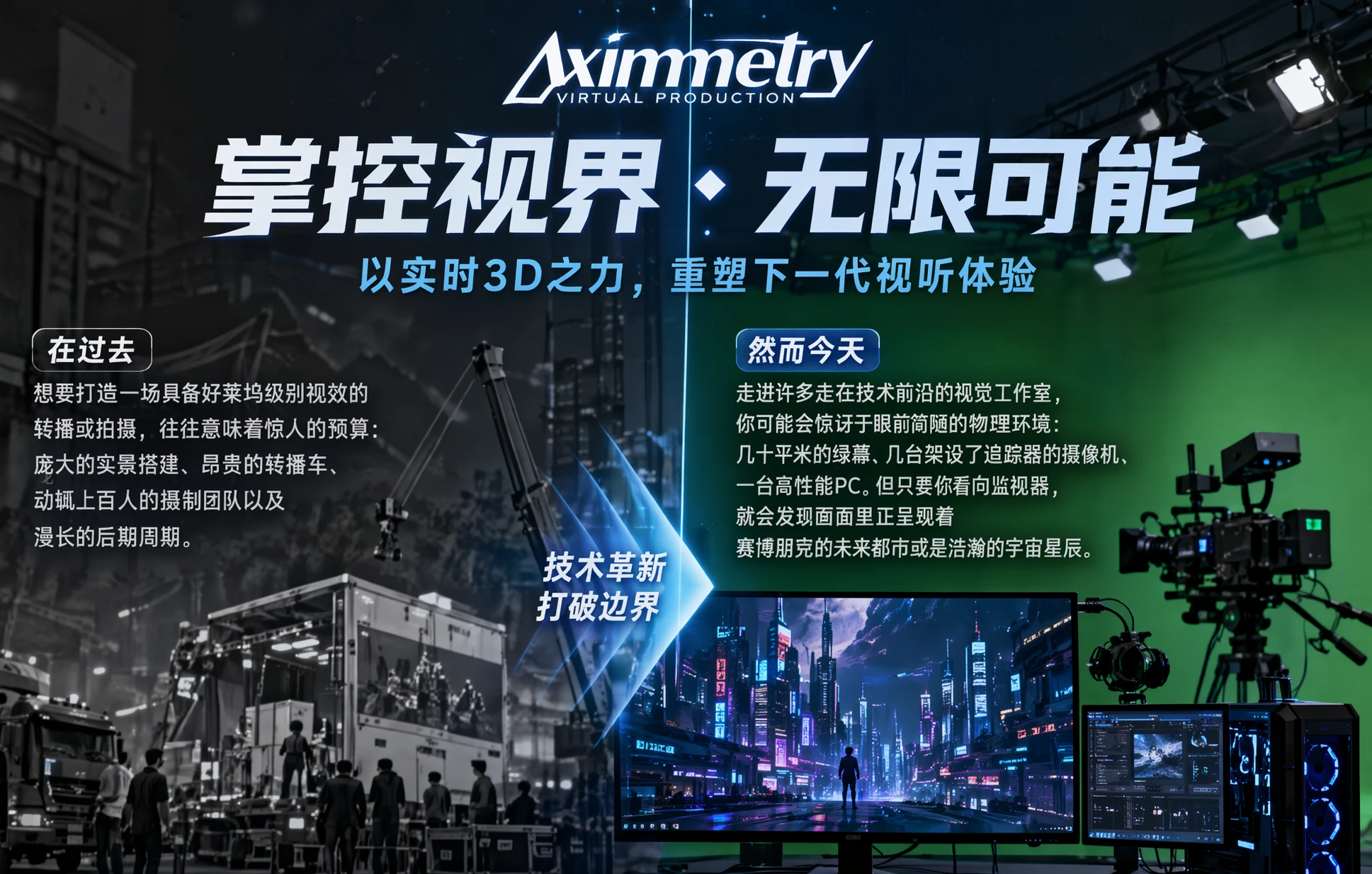
In the past, creating a broadcast or shoot with Hollywood-level visual effects often meant staggering budgets: massive physical sets, expensive OB vans, crews of hundreds, and long post-production cycles. Today, however, walking into many cutting-edge visual studios, you might be surprised by the modest physical environment: a few dozen square meters of green screen, a few cameras with trackers, and a high-performance PC. But as soon as you look at
2026-05-08
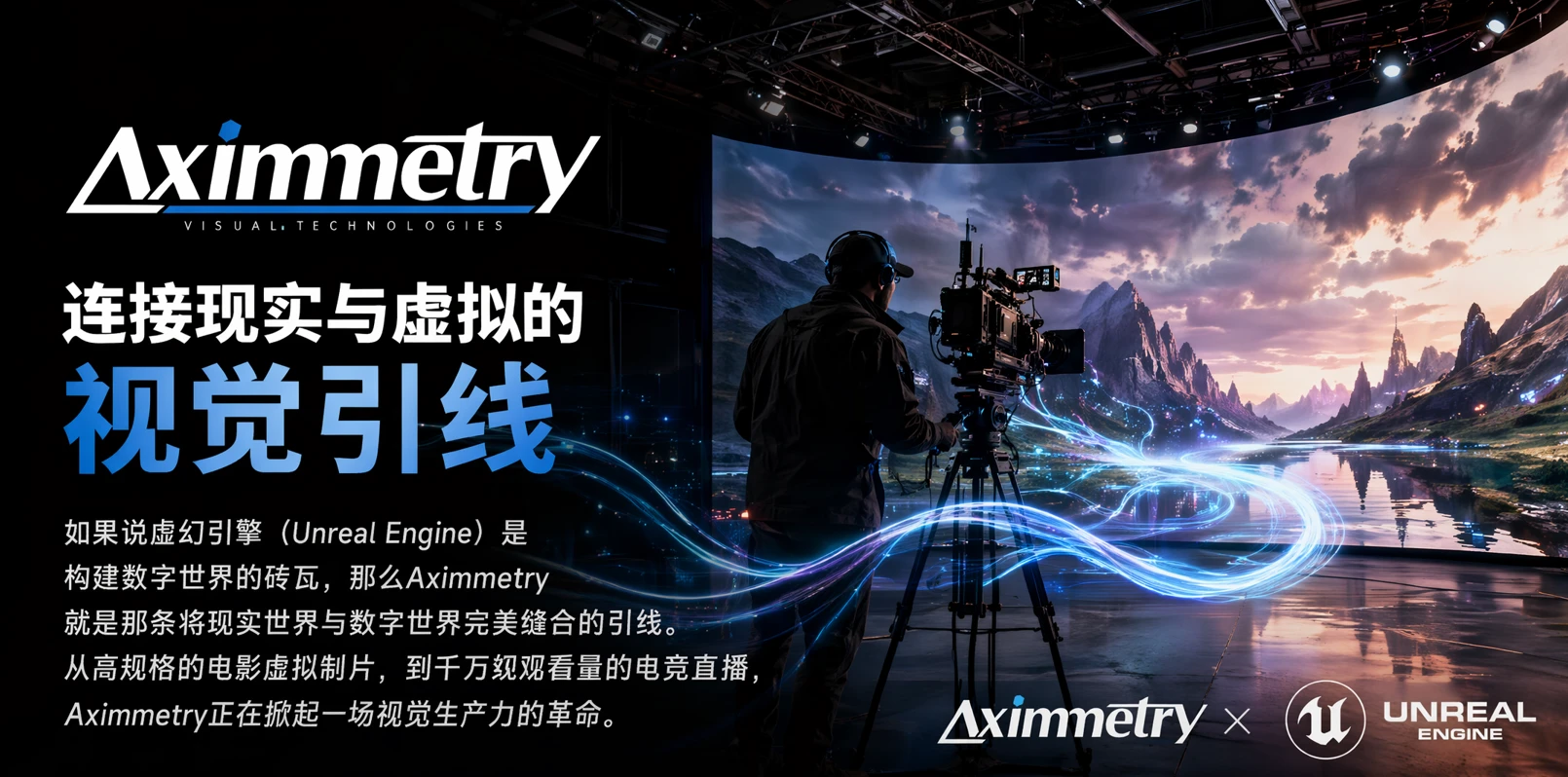
Imagine this scene: In front of a green screen less than 30 square meters, an actor is waving their arms at the air. But on the director's monitor, the actor is standing on the edge of a Martian crater, with a nearby spaceship spewing realistic exhaust flames, and light and shadow perfectly mapped onto their face. This was once a Hollywood post-production effect costing millions and taking months, but today, it can be rendered in real-time on set. The driving force behind all this “visual magic”
2026-05-07
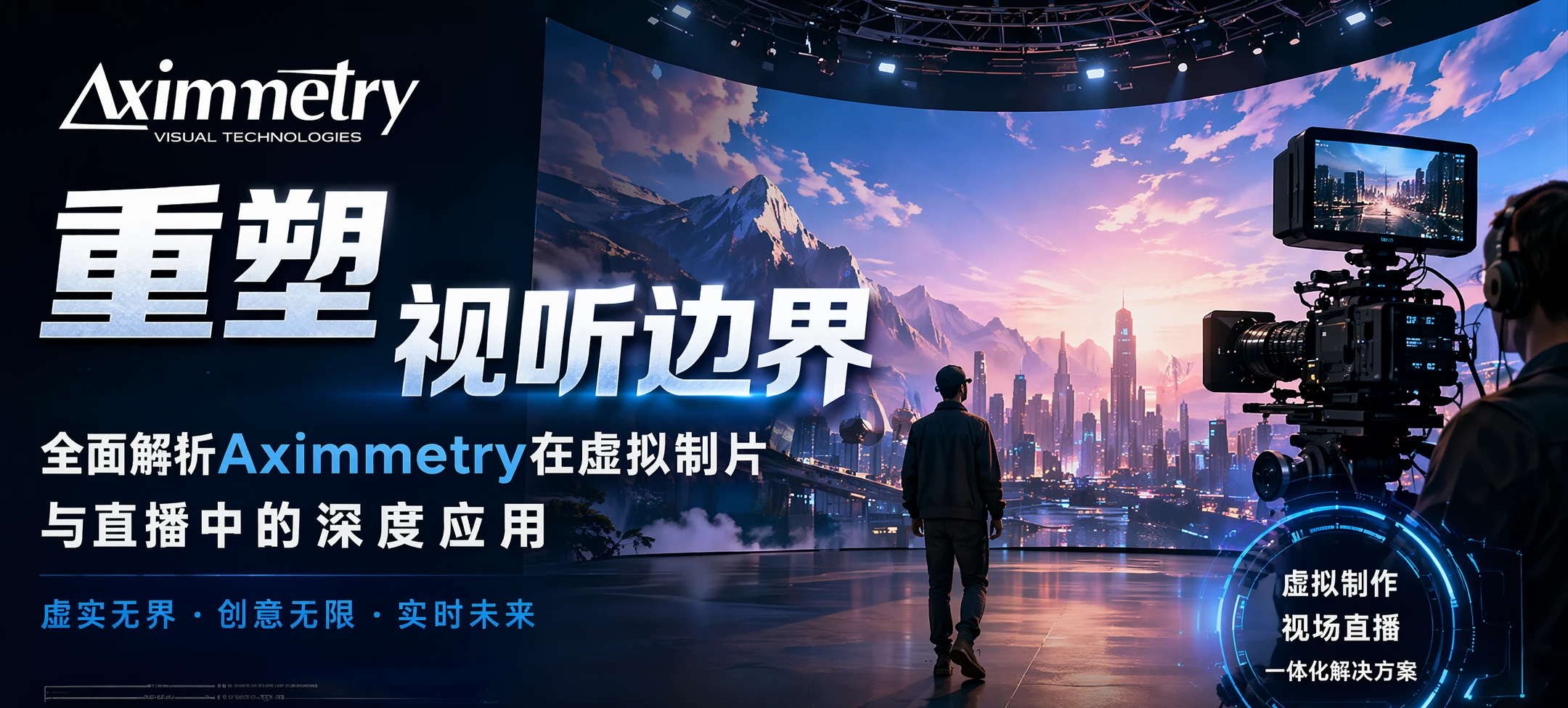
With the rapid development of digital technology, the film production and live broadcasting industries are undergoing an unprecedented “virtualization” revolution. In this transformation, Aximmetry, as a powerful node-based real-time 3D graphics and virtual studio software, is becoming a “super hub” connecting the physical and digital worlds with its outstanding performance and high flexibility. This article will delve into Aximmetry's role in virtual
2026-05-07
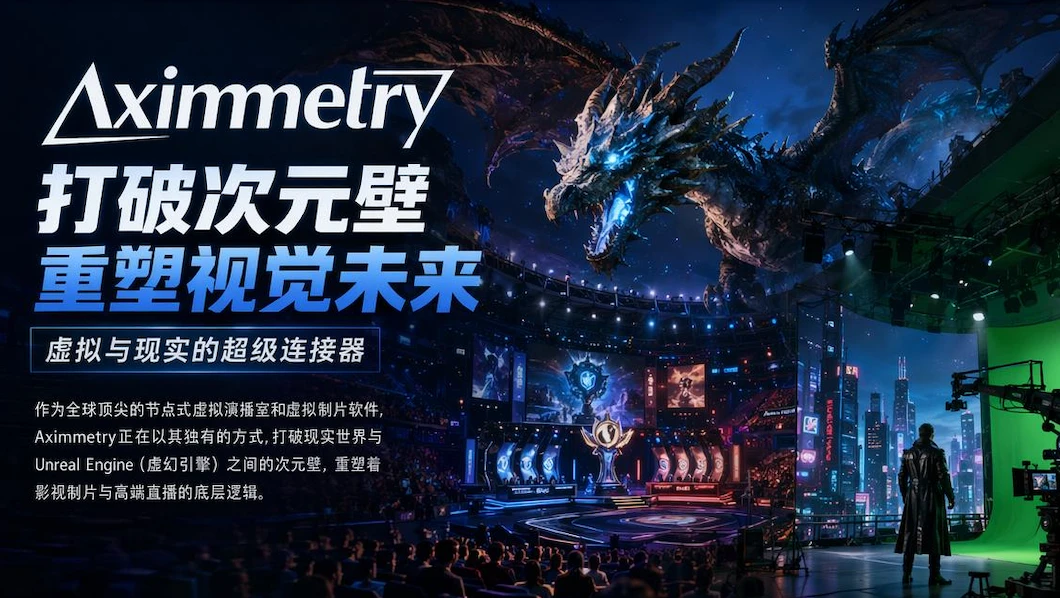
Not long ago, Hollywood blockbuster-level visual effects still relied on lengthy post-production, and a dazzling product launch required huge investments to build physical stages. But today, when you see a dragon circling above the arena in an esports event, or a movie actor already immersed in a cyberpunk city in front of a green screen on set, behind all this “what you see is what you get” magic lies a key “super brain”—Aximmetry. As a globally leading
2026-05-07
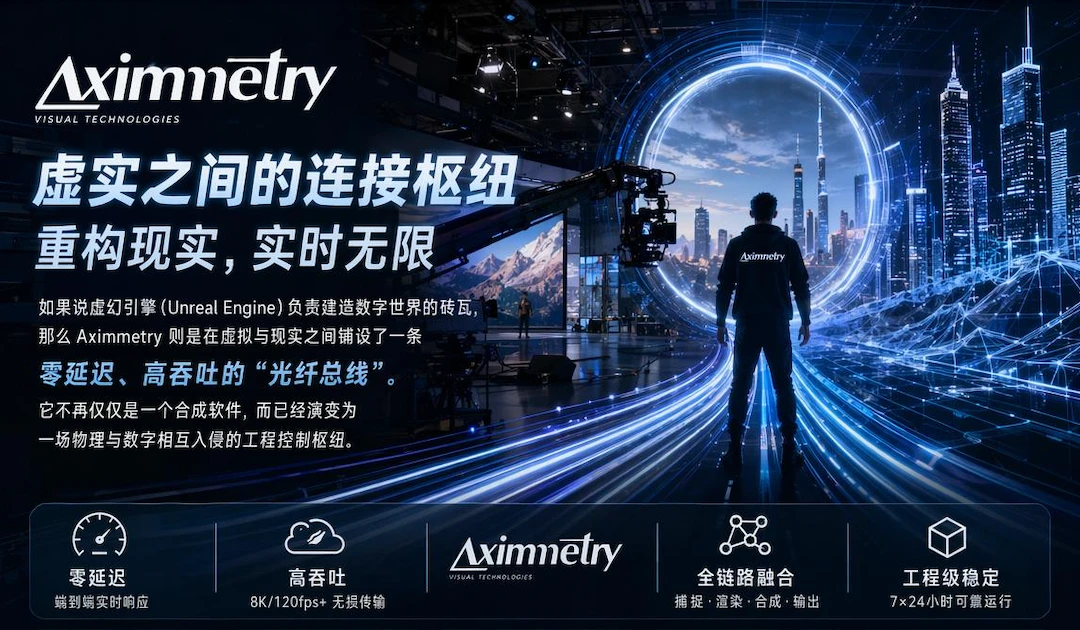
On the front line of implementation, a more hidden yet critical “infrastructure project” is advancing at full speed: the seamless stitching technology between the real physical world and high-fidelity virtual scenes. If Unreal Engine is responsible for building the bricks and mortar of the digital world, then Aximmetry is laying a zero-latency, high-throughput “fiber optic bus” between the virtual and the real. It is no longer just a compositing software but has evolved into
2026-05-07
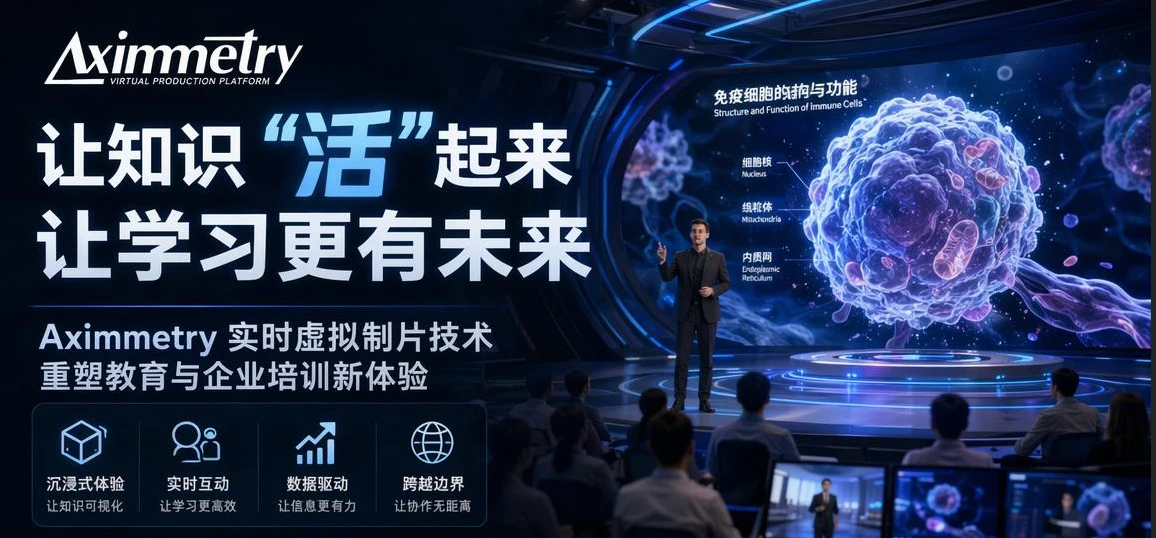
If you've attended internal training at a multinational corporation or listened to a large public lecture at a university, you've likely experienced this scenario: the presenter dryly flips through dozens of dense PPT slides while the audience struggles to stay awake. Even when switched to online live streaming, the boring “talking head + shared screen” format makes it hard to focus. Traditional knowledge delivery methods are facing a severe “attention drain” crisis. But in the field of educational technology (
2026-05-07
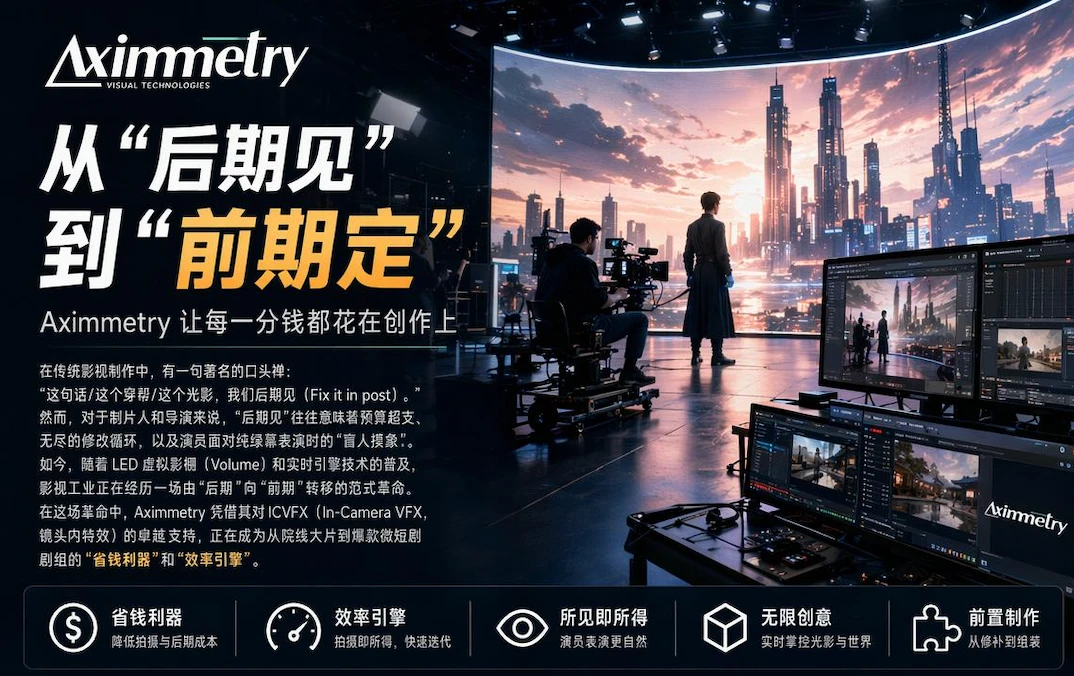
In traditional film and television production, there's a famous saying: “This line/this blooper/this lighting, we'll fix it in post.” However, for producers and directors, “fix it in post” often means budget overruns, endless revision cycles, and actors performing “like a blind person groping an elephant” in front of a pure green screen. Today, with LED virtual production stages (Volumes) and real-time engine technology
2026-05-06
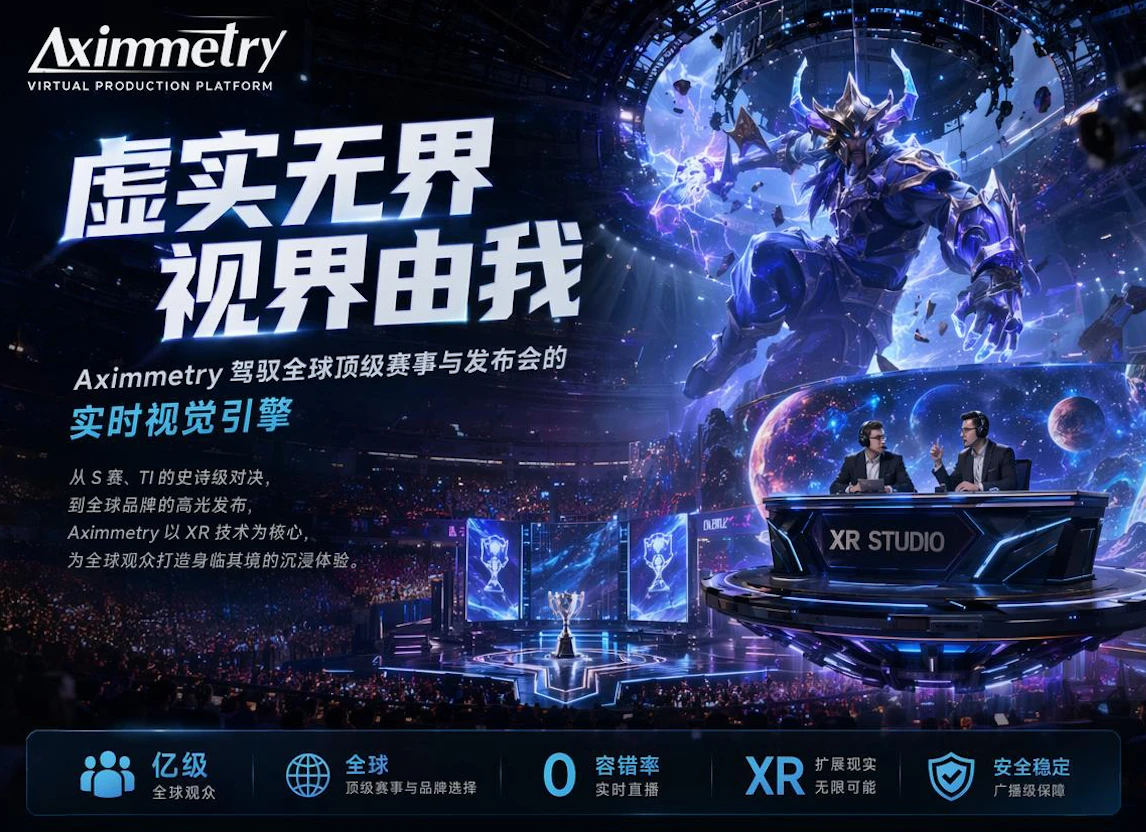
If you've watched the recent League of Legends World Championship (Worlds) or The International (TI) for Dota 2, you'll surely remember these scenes: massive 3D game characters “landing” on the dome of a real stadium; real-life commentators sitting in a commentary desk suspended in a virtual universe; real-time data charts magically orbiting the players. In the field of brand marketing, from global premieres of new energy vehicle startups to
2026-04-30
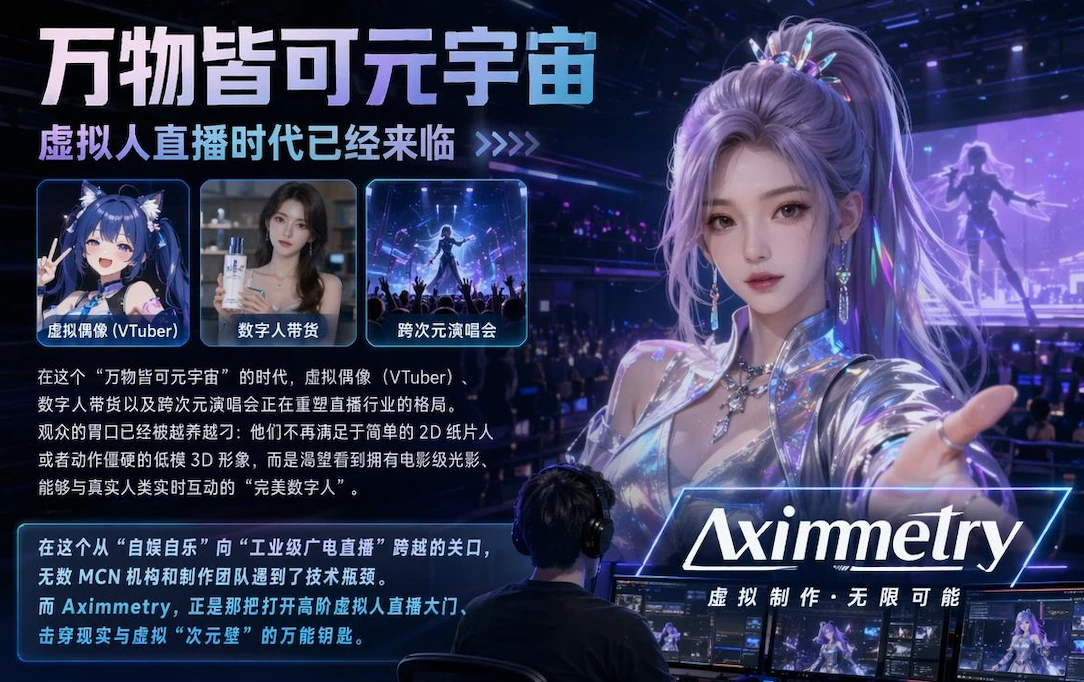
In this era of “everything can be a metaverse,” virtual idols (VTubers), digital human live commerce, and cross-dimensional concerts are reshaping the landscape of the live streaming industry. Audiences“ tastes are becoming increasingly sophisticated: they are no longer satisfied with simple 2D paper dolls or stiff, low-poly 3D models. Instead, they crave ”perfect digital humans“ with cinematic lighting who can interact with real people in real-time. In this transition from ”self-entertainment“ to "
2026-04-30
 简体中文 简体中文
  English