
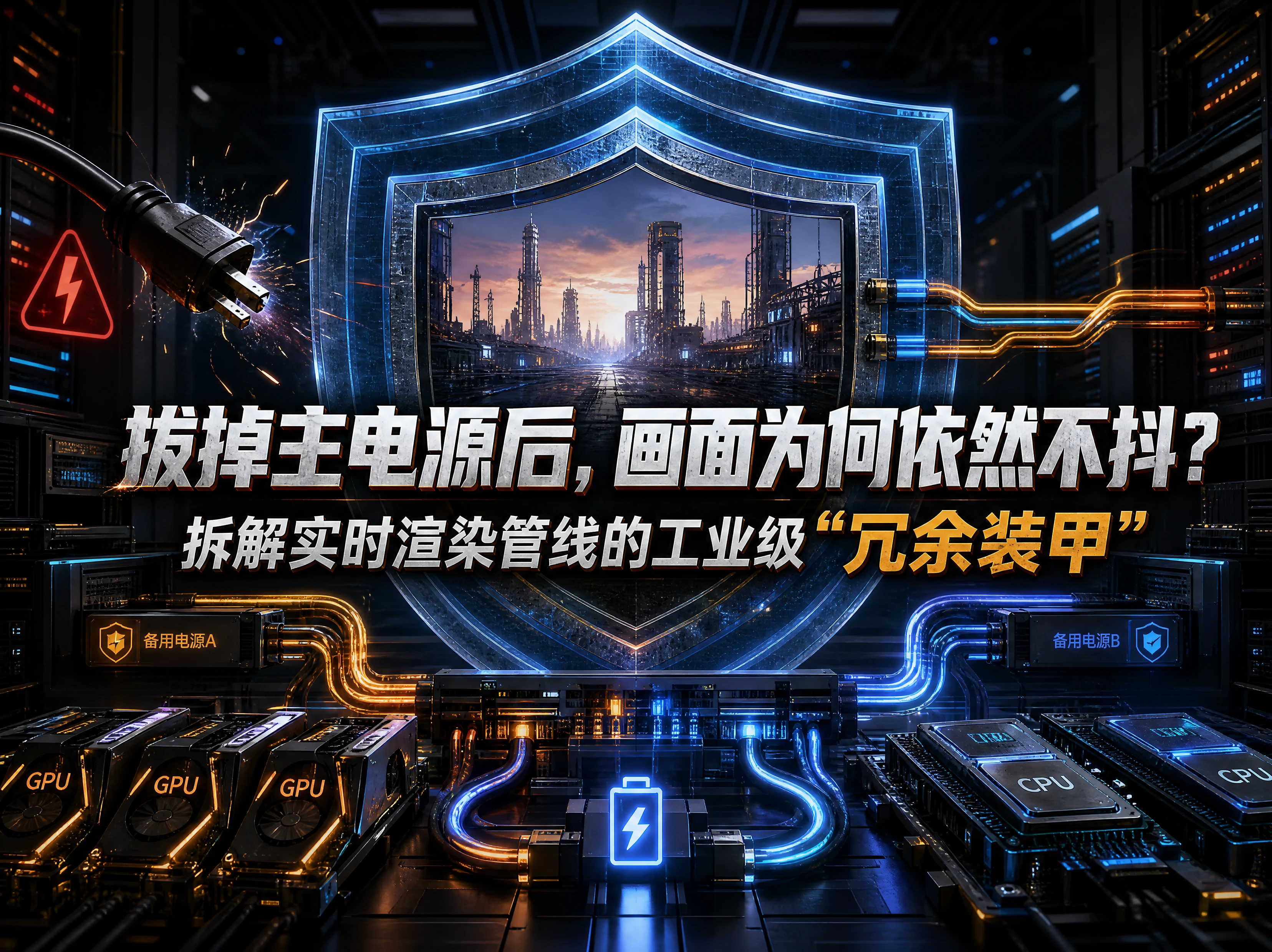
In the technical command center of S-level TV broadcasts (like the Super Bowl, election night), the ultimate standard for measuring a real-time graphics system is not how many polygons it can run, but its “crash survival rate.”
As a broadcast truck chief engineer (EIC), when you look at the monitor and see an incredibly realistic AR dragon generated by Unreal Engine (UE5), your palms are sweating. Because you know that UE5 is essentially a single-threaded application designed for games.
 2026-05-19
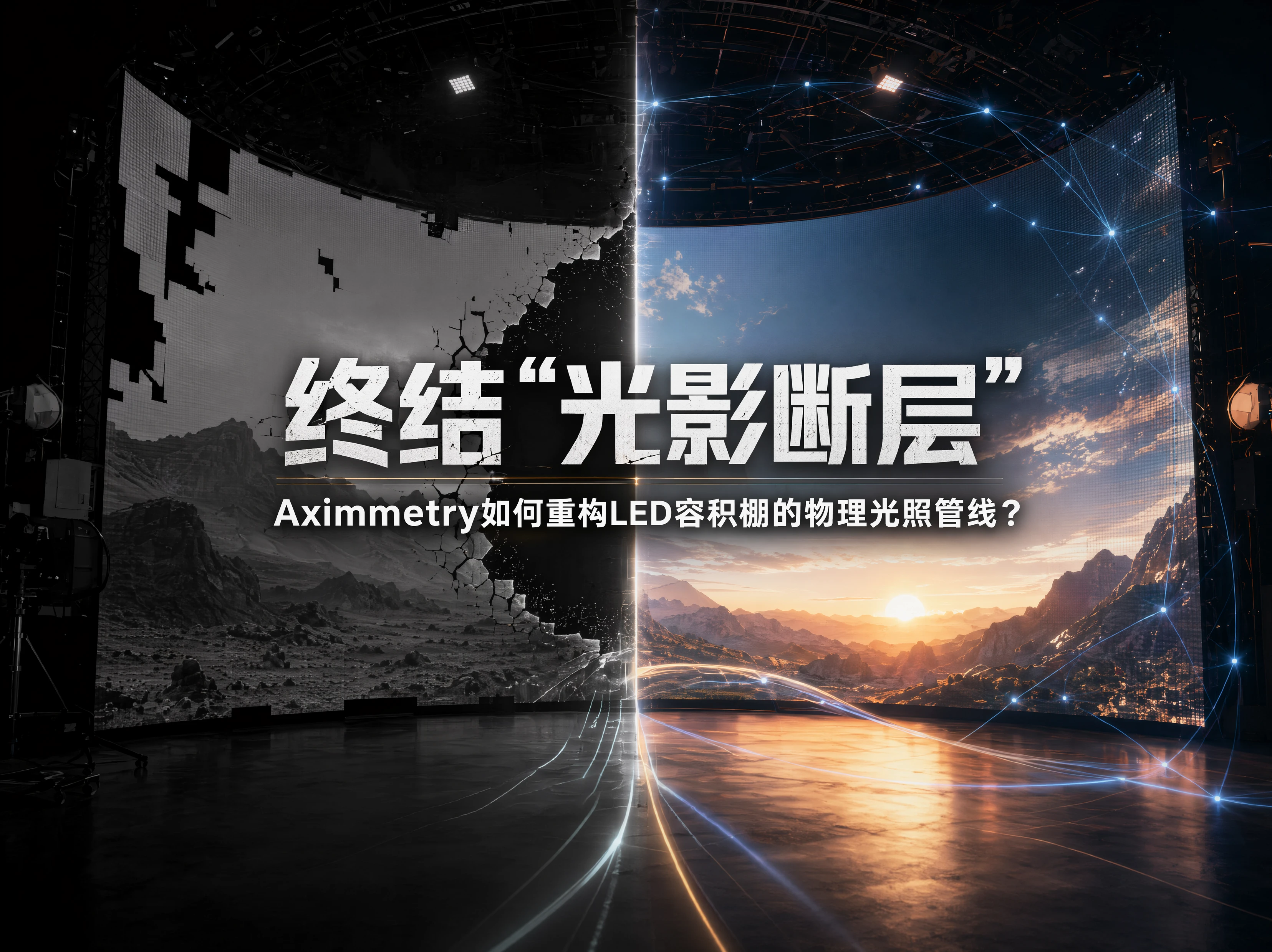
If you've spent time in a multi-million dollar LED Virtual Production (VP) stage, you've surely witnessed a “disaster” like this:
The director asks for a shot of a car speeding through a virtual cyberpunk city. To make the reflections on the car body look real, the technical team uses UE5 to project the rendered city neon lights onto the overhead LED ceiling as a light source. At the same time, on-site
2026-05-15
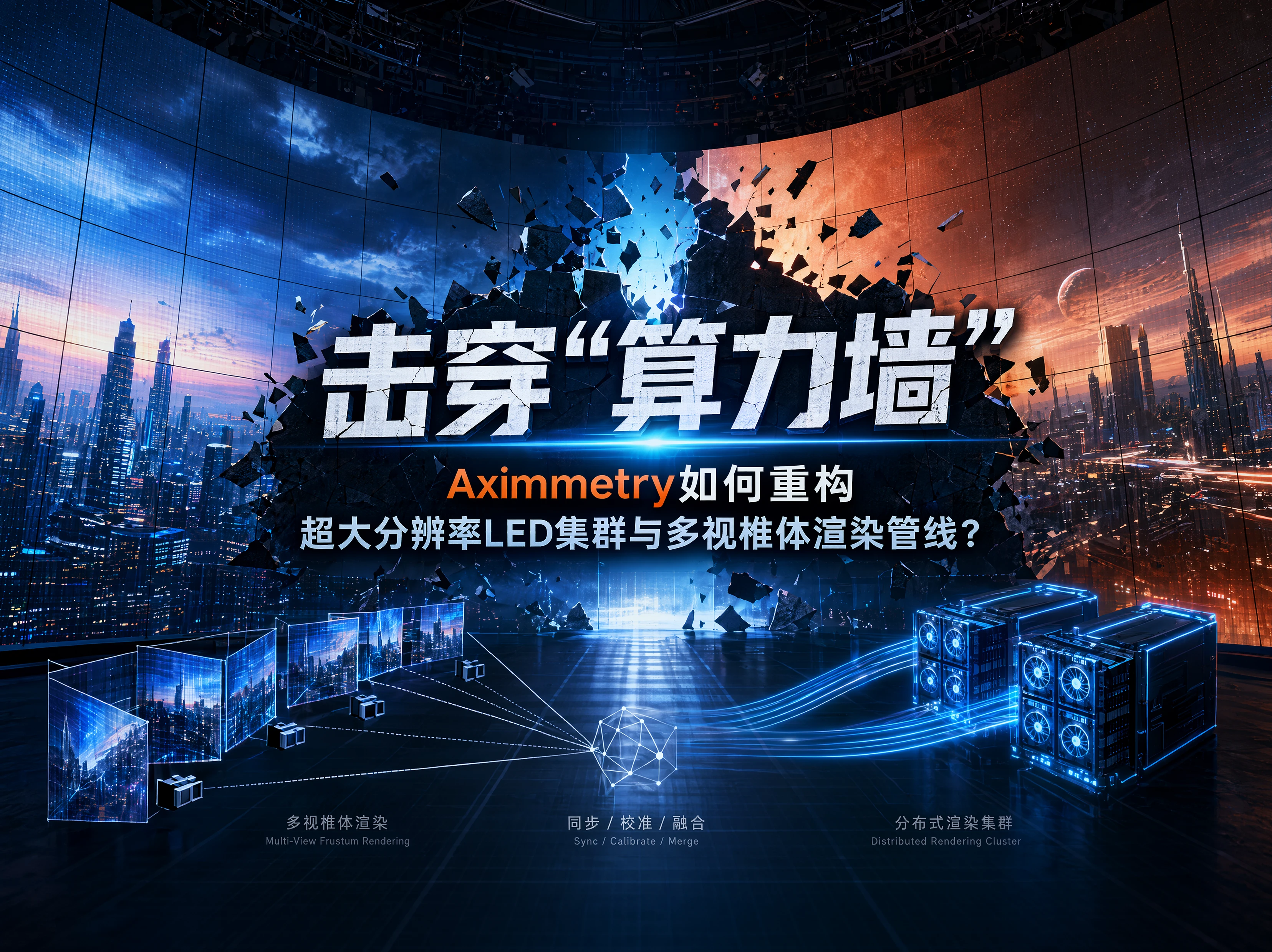
As a Technical Director (TD) who has led ultra-large XR stages or giant curved-screen projects, if you've ever used a native pipeline to light up a 50-meter-long LED screen with a resolution of up to 16K, you'll remember that feeling of despair vividly.
Facing such projects, the compute power of a single GPU feels as fragile as paper against Lumen and Nanite. You must build a rendering cluster composed of multiple top-tier workstations (R
2026-05-15
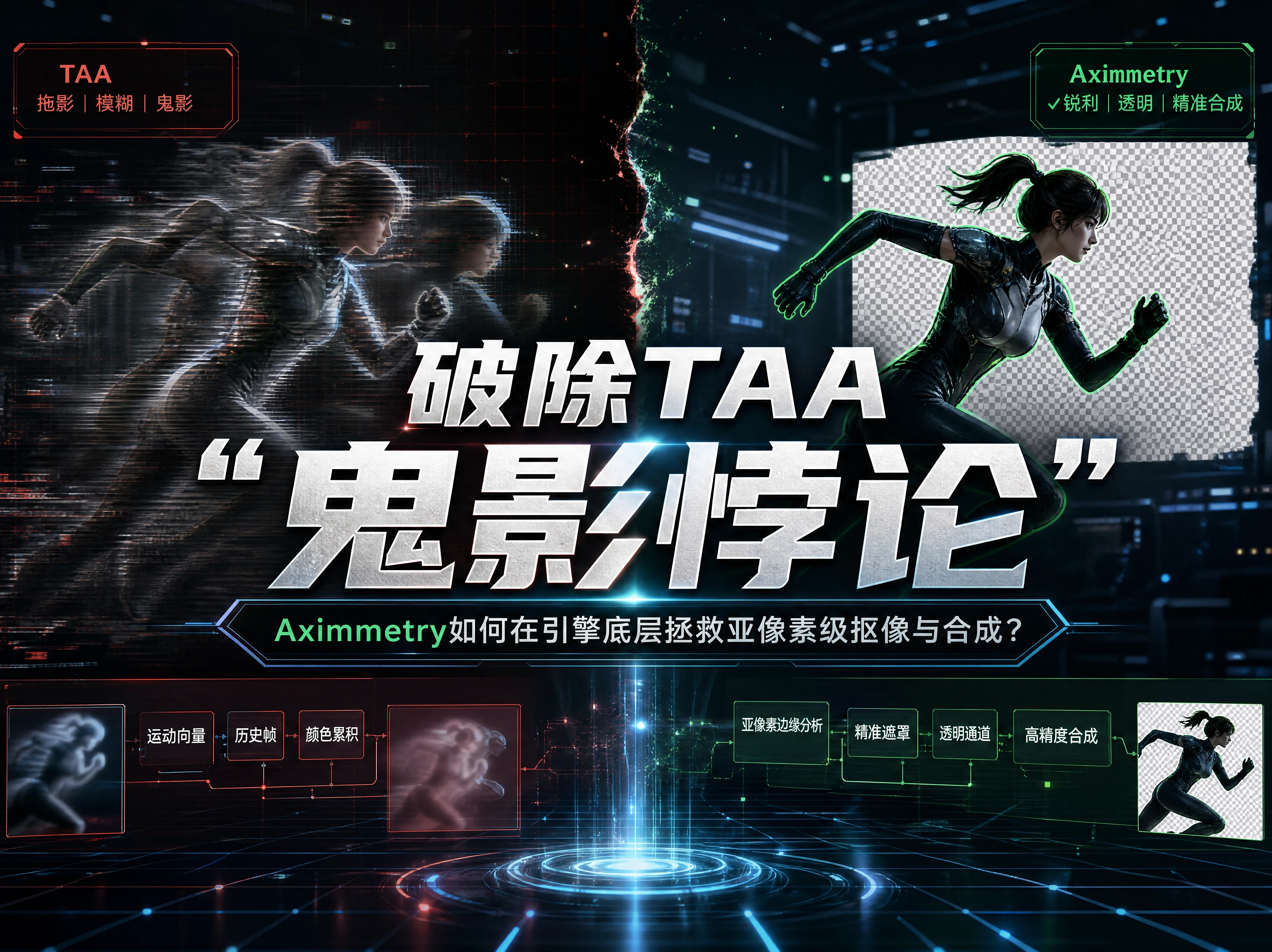
If you've been in high-end Virtual Production (VP) or real-time compositing long enough, you'll inevitably encounter a “deadlock” that drives countless Compositors and TDs crazy.
When the director looks at the monitor, frowns, and says, “Why are the edges of the actor's hair so rough? And when he moves, why is there a trailing blur in the background?”
At this point, you take a deep breath, facing an unsolvable technical paradox: In virtual
2026-05-15
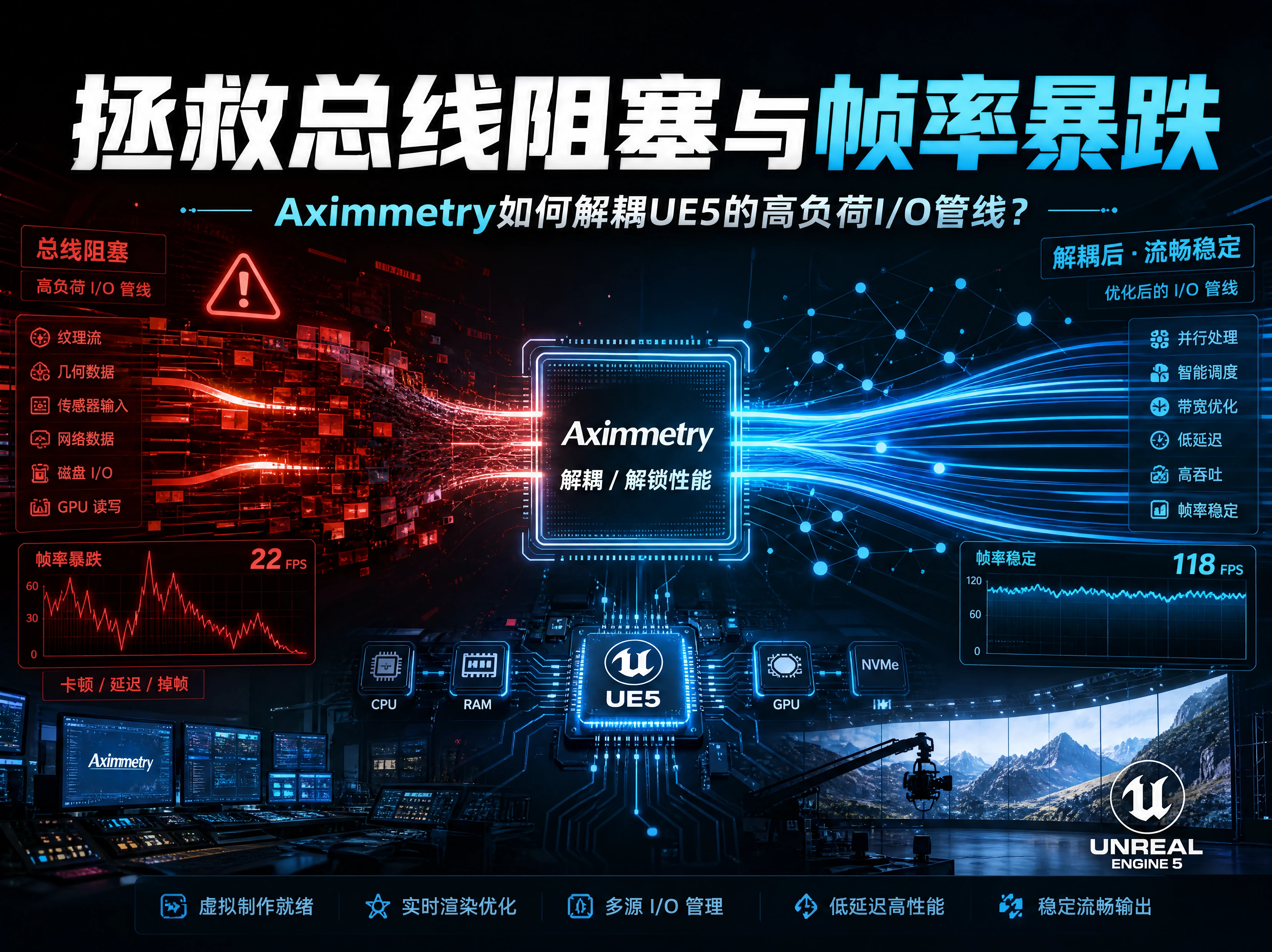
If a million-dollar esports AR broadcast stutters (drops frames) during a live stream, the boss usually roars: “Why didn't we get the best graphics cards? Didn't we install four RTX 4090s?!”
At that moment, as the TD (Technical Director), you can only scream in despair in your mind: “It's not the GPU's fault at all! The CPU main thread is being choked to death by I/O data!”
In a system built on Unreal Engine 5 (UE5),
2026-05-15
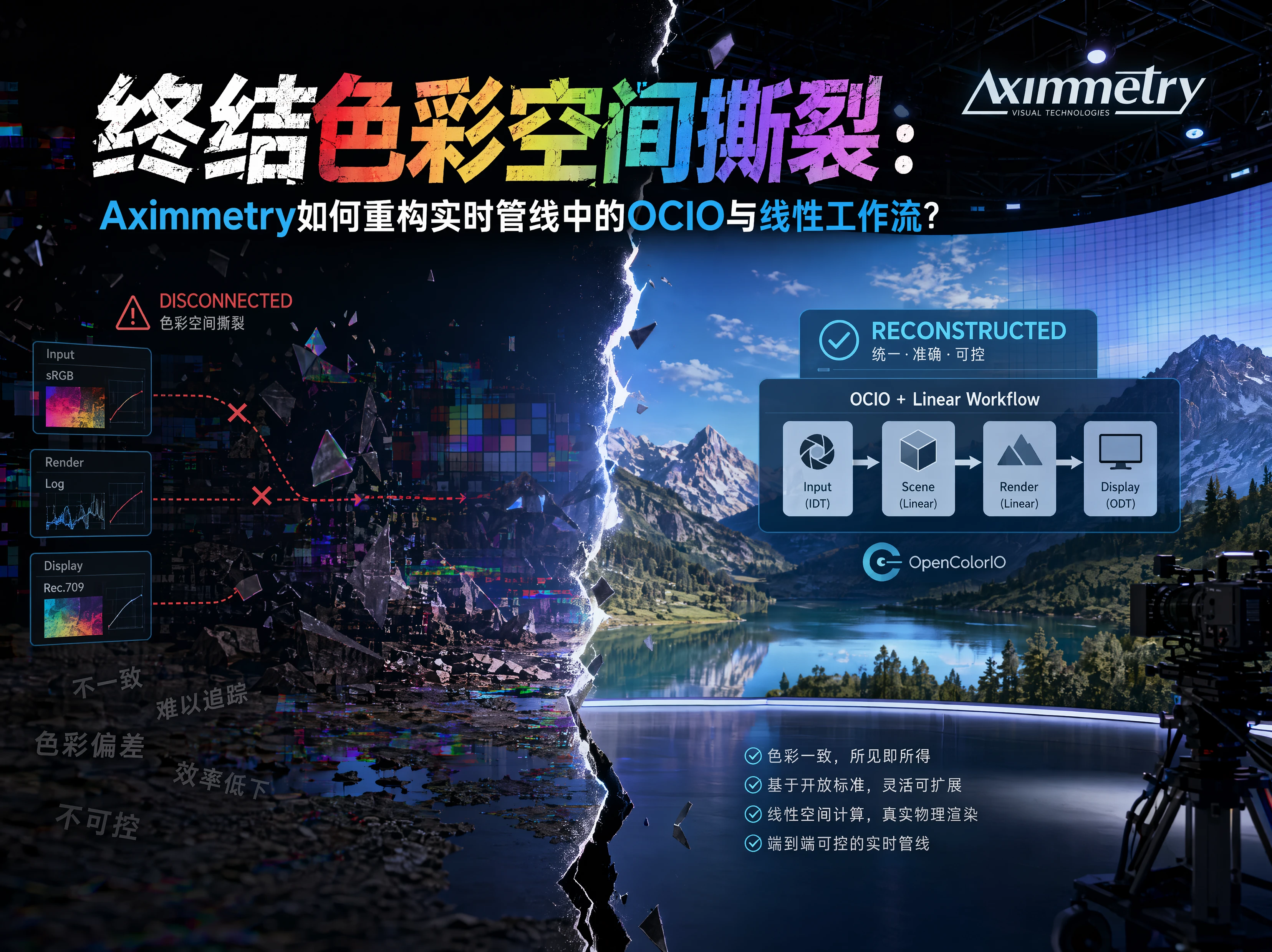
In a virtual production (VP) or XR live streaming tech group, if you want to instantly spike the blood pressure of an experienced TD, just show them a composite screenshot with “an eerie magenta tint in highlights and completely crushed black details in shadows.”
This is often not a lighting issue, but an outbreak of “Color Space Tearing” in the underlying pipeline.
In real-time production, we face a
2026-05-14
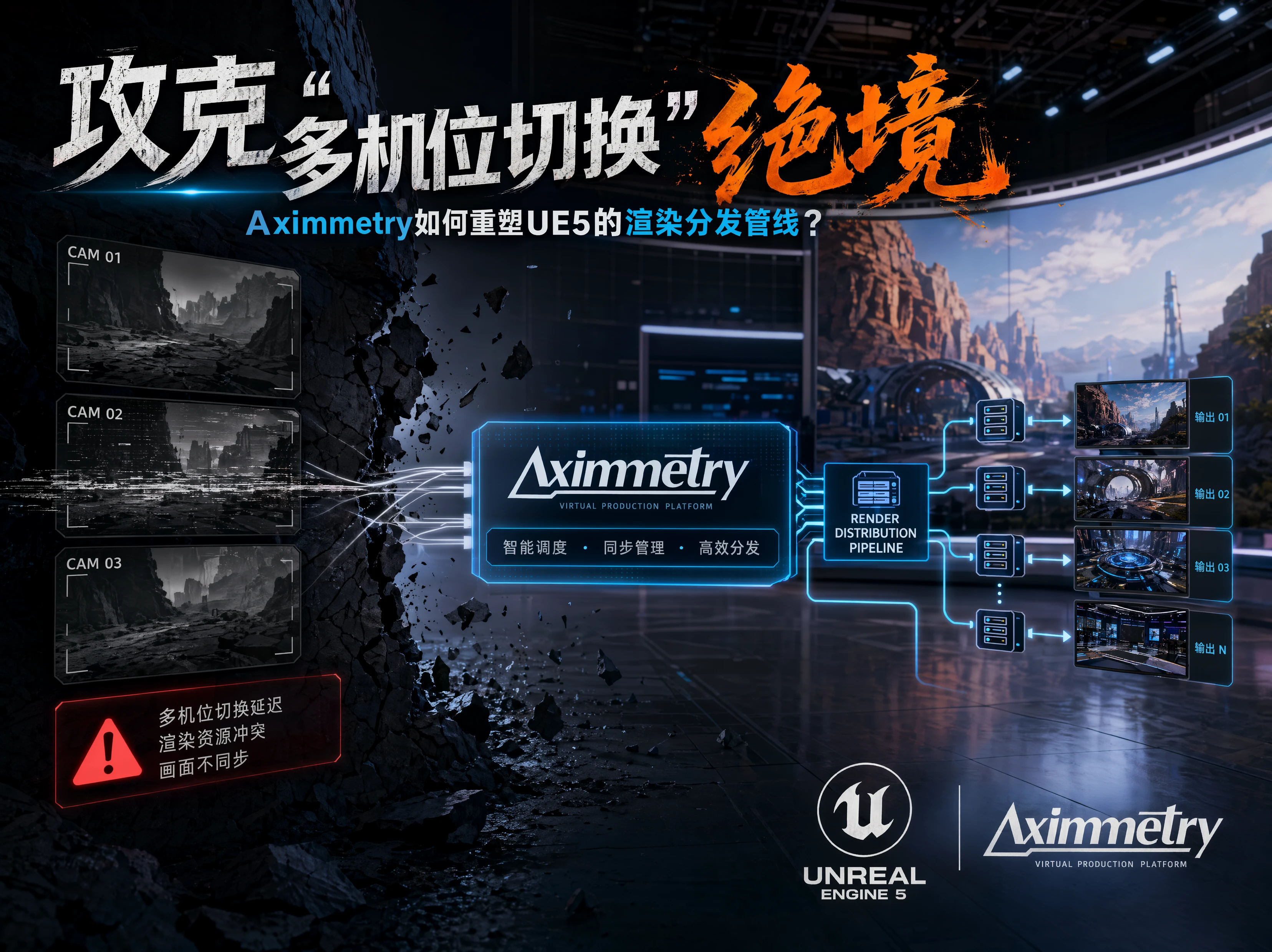
In the real-world workflow of virtual production (VP) and XR live streaming, if you only use a single camera for a “one-shot take,” the technology is already quite mature.
But if you've ever served as a TD (Technical Director) for any large-scale XR broadcast, you know that the moment the director shouts “Prepare to switch to Camera 2,” the hearts of the backstage technical team skip a beat.
On a traditional switcher, multi-camera switching is just a few milliseconds of video signal switching (Cut
2026-05-14
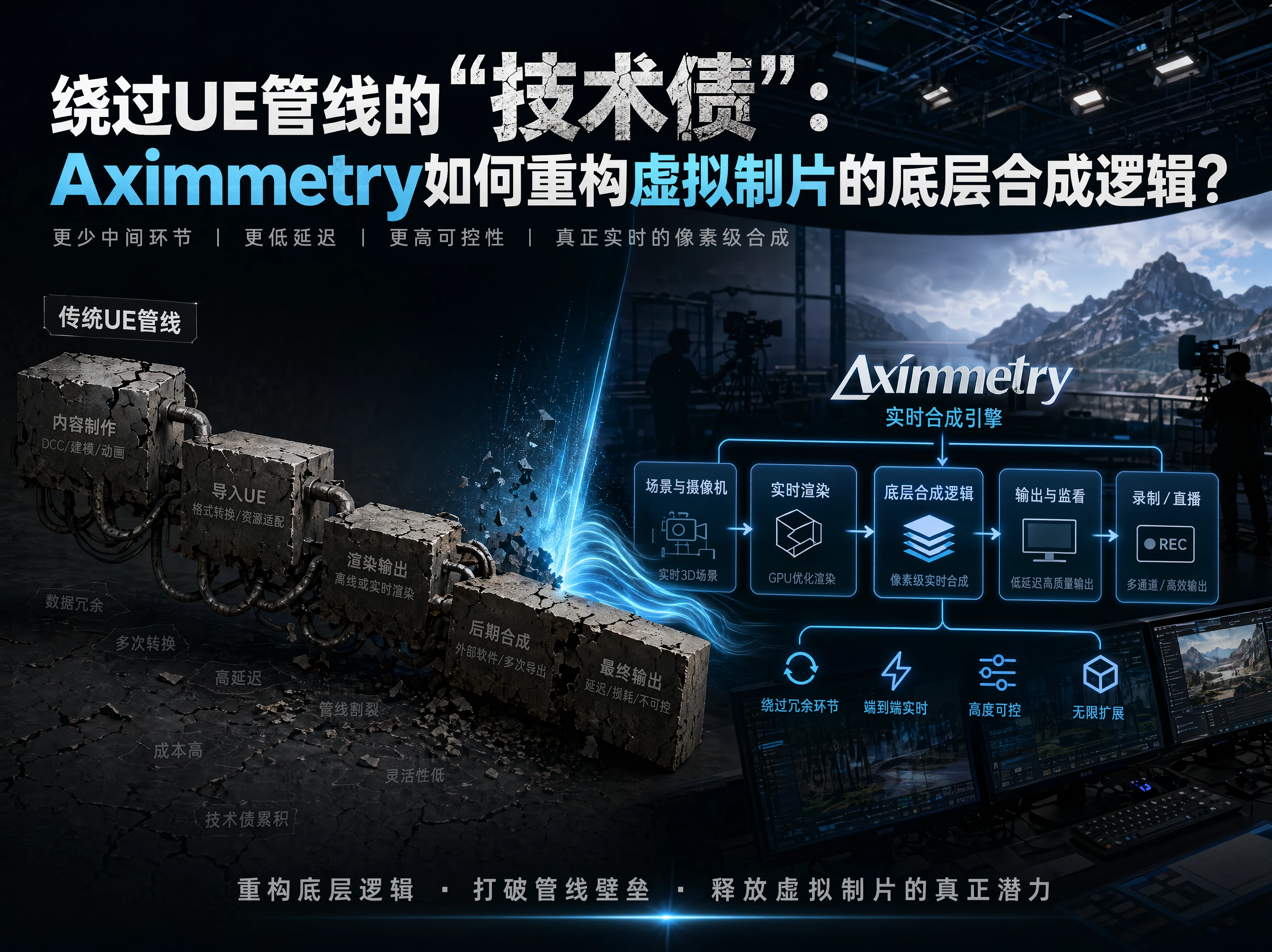
As a TD (Technical Director) who has been on the front lines of virtual production (VP) and XR broadcasting for five years, if someone asks me: “Why do you have to use Aximmetry? Can't you just use Unreal Engine 5 (UE5)”s native nDisplay and Composure?"
I usually respond with a wry smile.
Outsiders look at VP and see Lumen's ray tracing and N
2026-05-14
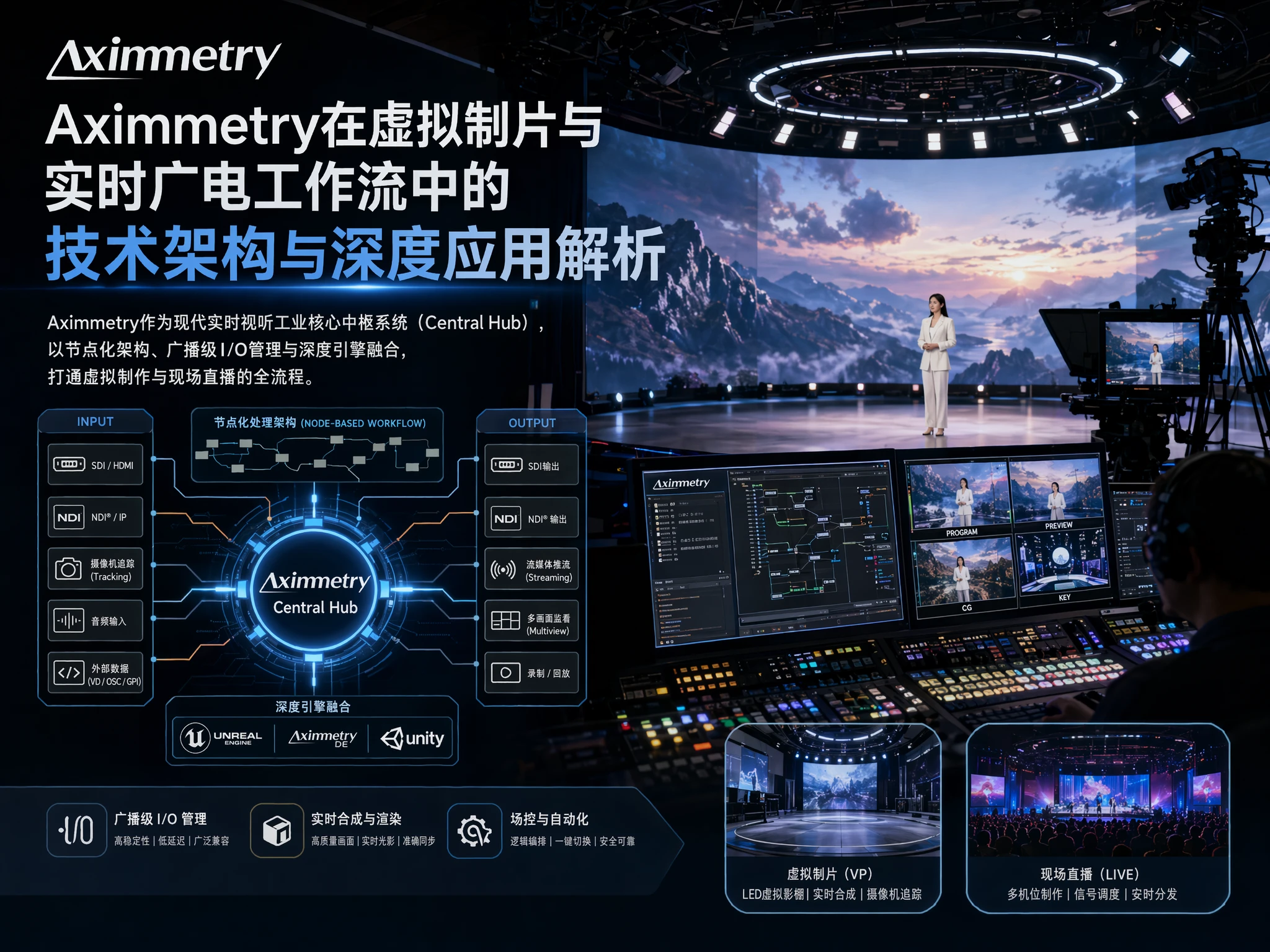
With the leap in performance of real-time rendering engines (such as Unreal Engine), the film industry and broadcast television are moving comprehensively towards real-time and virtual workflows. However, directly applying a game-based rendering engine to demanding broadcast live streams and complex virtual production (VP) sites often faces a series of engineering technical barriers, including signal scheduling, protocol compatibility, and field control logic.
Against this backdrop, Aximmetry, with its
2026-05-09
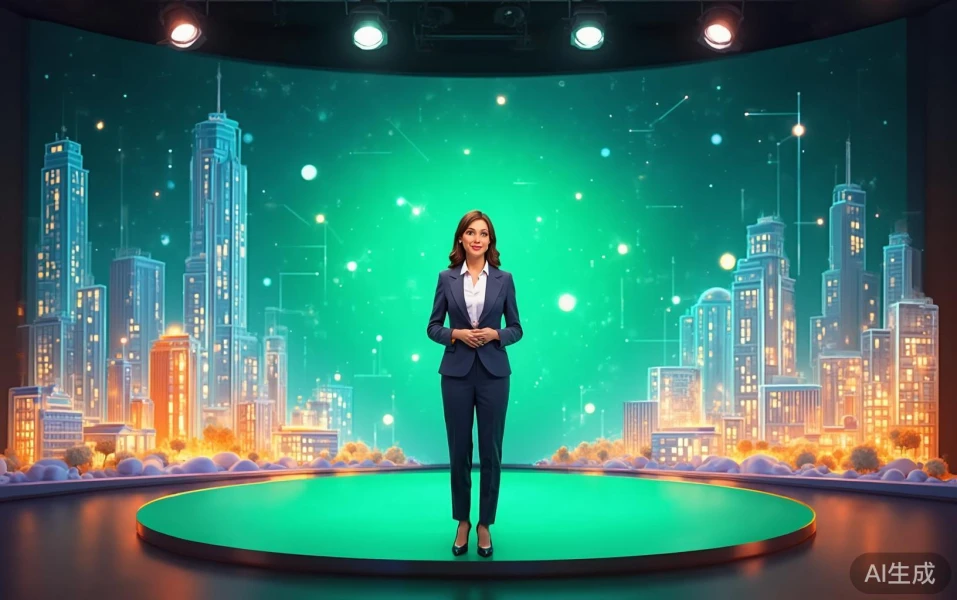
With the popularization of virtual studios, XR (Extended Reality), and the metaverse concept, one name is being mentioned more and more frequently in the film and broadcast circles—Aximmetry (often abbreviated as “Axi” in the industry).
What exactly does it do? Why are even Hollywood-level teams using it? If you or your team are preparing to step into the field of real-time virtual production, these 8 core Q&As will clear the fog for you.
Q1: A
2026-04-29
 简体中文 简体中文
  English